




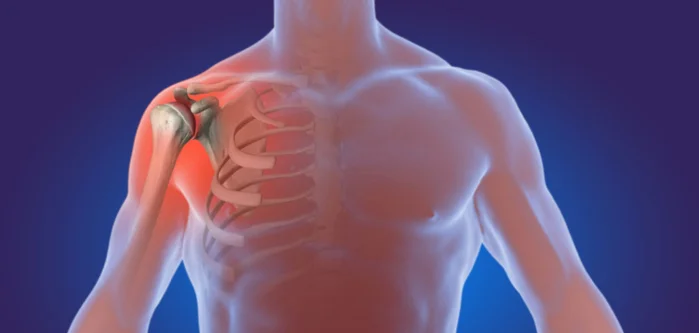
What is shoulder arthritis?
Shoulder arthritis is the wear and tear or inflammation of the two joints of the shoulder, where the upper bone of the humerus meets the glenoid of the scapula (glenohumeral joint) and the clavicle bone meets the acromion (roof) of the scapula (acromioclavicular joint). This inflammation can be caused by osteoarthritis or “wear and tear”, a severe joint injury from a fracture, or inflammatory arthropathy.
Symptoms include shoulder pain that may worsen with movement or during sleep, shoulder stiffness or limited mobility, as well as redness or swelling in the area.
Treatment depends on the form of arthritis and the severity of the pain, but it can include rest, pain relief methods, exercises to strengthen and stabilize the shoulder, steroid and platelet-rich plasma (PRP) injections, and surgery.
Symptoms of arthritis
The symptoms of shoulder arthritis mainly include the following:
- Shoulder pain: This pain usually starts gradually and worsens with movement, although over time, the pain may occur at night and affect sleep. The pain is usually located at the front of the shoulder, but it can be at the back of the shoulder or throughout the entire shoulder, depending on the type of arthritis.
- Shoulder stiffness or limited range of motion: Some people with shoulder arthritis may develop shoulder stiffness or a limitation in their range of motion. It can be difficult to raise the arm upward, such as when combing hair or reaching for objects. A grinding sound (crepitus) may be heard as the humerus moves.
- Increased shoulder temperature, redness, or swelling: These symptoms are more common in rheumatoid arthritis (an inflammatory arthropathy) than in osteoarthritis, which is mostly due to the physical wear and tear of the joint.
What causes shoulder arthritis?
The shoulder joint is stabilized by a group of muscles and tendons called the rotator cuff. Symptoms of shoulder arthritis can be felt throughout or originate from problems in these areas. Specific causes include osteoarthritis, fractures, and rheumatoid arthritis.
Osteoarthritis
The most common form of arthritis affecting the shoulder is osteoarthritis, which results from the normal “wear and tear” of the shoulder joint. The bones of the shoulder are normally covered with cartilage, a substance that acts as a cushion and allows the bones to glide smoothly against each other. Over time, the cartilage covering the ends of the bones degenerates, allowing the bones to rub against each other and cause joint damage. Shoulder osteoarthritis usually affects people over the age of 60.
Fracture/Dislocation
These injuries can increase the risk of developing osteoarthritis because damaged joints tend to create more friction and are more prone to further damage. The injury may have occurred years before the shoulder arthritis developed.
Chronic shoulder tendon tears (“rotator cuff tear arthropathy”)
Injuries to the shoulder tendons, such as a large tear, can also increase the risk of developing osteoarthritis of the shoulder joint. The rotator cuff tendons normally help keep the shoulder joint in place, so an injury to the rotator cuff muscles can cause misalignment of the shoulder joint bones and lead to wear and tear (secondary arthritis) due to abnormal friction of the bones against each other.
Rheumatoid arthritis
A form of inflammatory arthritis is known as rheumatoid arthritis, which is an autoimmune disorder that can cause inflammation in multiple joints throughout the body. Rheumatoid arthritis involves inflammation of a fluid inside the joints that normally lubricates and nourishes the joint. The inflammation of this fluid eventually damages the surrounding cartilage and bone. Rheumatoid arthritis typically affects the small joints of the hands and wrists, but it can sometimes affect large joints such as the shoulder.
Treatment options and prevention for shoulder arthritis
Advanced shoulder arthritis is a chronic condition that usually cannot be fully cured without surgery. Therefore, treatments focus on controlling symptoms and slowing the progression of the disease. Specific treatment options include painkillers, heat or cold, rest, certain stretches and exercises, steroid injections, biological therapies, and surgery.
Painkillers
Mild pain can usually be managed with over-the-counter simple painkillers and NSAIDs.
Heat or cold
Some people with shoulder arthritis may experience a reduction in their pain by applying heat or cold to the shoulder for 10 to 15 minutes at a time, several times a day. This can help reduce inflammation and relieve pain.
Activity restriction and rest
Those who experience a flare-up in pain from shoulder arthritis may benefit from a period of rest and restricting their activities, such as heavy lifting, reaching overhead, or forceful pushing or pulling. This will give the joint time to rest and heal.
Shoulder stretches and strengthening exercises
After controlling the acute episode of pain, your doctor may recommend that you do shoulder stretches and strengthening exercises. An example of a stretching exercise is called the “weighted pendulum stretch,” in which a small weight is held in the hand while the arm is allowed to swing back and forth. Other exercises can be used to strengthen the rotator cuff muscles, which increases support for the shoulder joint.
Steroid and platelet-rich plasma (PRP) injections into the shoulder joint
People with shoulder arthritis whose pain is not well controlled with pain medication and rest may benefit from steroid and PRP injections into the shoulder joint. The latter can reduce inflammation in the joint and help relieve pain. These injections may be repeated at regular intervals.
Surgery to repair or replace the shoulder joint – Total shoulder arthroplasty or Reverse shoulder arthroplasty
For those with shoulder arthritis that does not respond to other treatments, Mr. Polyzois will recommend joint replacement surgery for the shoulder. There are a number of surgical options for treating shoulder arthritis.
- Arthroscopy: Milder forms can be treated with shoulder arthroscopy, in which Mr. Polyzois uses small instruments to clean the inside of the joint.
- Arthroplasty: More severe cases may need to be treated with shoulder joint replacement or arthroplasty. In arthroplasty, part or all of the shoulder joint bones are removed and replaced with prosthetic implants. After the surgery, a period of physical therapy will follow to help fully restore function.
We offer you only the best treatments and options for your condition and symptoms – all verified by our medical team. Our ultimate goal is to provide high-level services with the most modern techniques of diagnosis, treatment, and rehabilitation.
And if you are not sure what is going on, Mr. Polyzois and his team are by your side to reassure you and guide you on the right path.
When should you seek advice from a specialized shoulder orthopaedic surgeon for arthritis?
You should visit the specialist if you experience shoulder pain, limited range of motion, or swelling. Mr. Polyzois will examine you carefully after taking a full history and will send you for imaging tests to determine if you have arthritis, and will then offer the most appropriate treatment to cure your symptoms.