Σύνδρομο Πρόσκρουσης

Shoulder Impingement Syndrome

ΠΕΡΙΕΧΟΜΕΝΑ

Shoulder impingement syndrome (known in the medical community as Subacromial Impingement Syndrome) constitutes one of the most frequent and agonizing conditions of the musculoskeletal system. According to international clinical studies, impingement syndrome is extremely common and accounts for 65% of all causes of shoulder pain. Due to the complexity of the shoulder joint and its daily use in almost every move we make, the onset of inflammation or mechanical restriction in the area can significantly downgrade the patient’s quality of life, affecting sleep, work, and sports activities.

What is Shoulder Impingement Syndrome (Subacromial Impingement)?

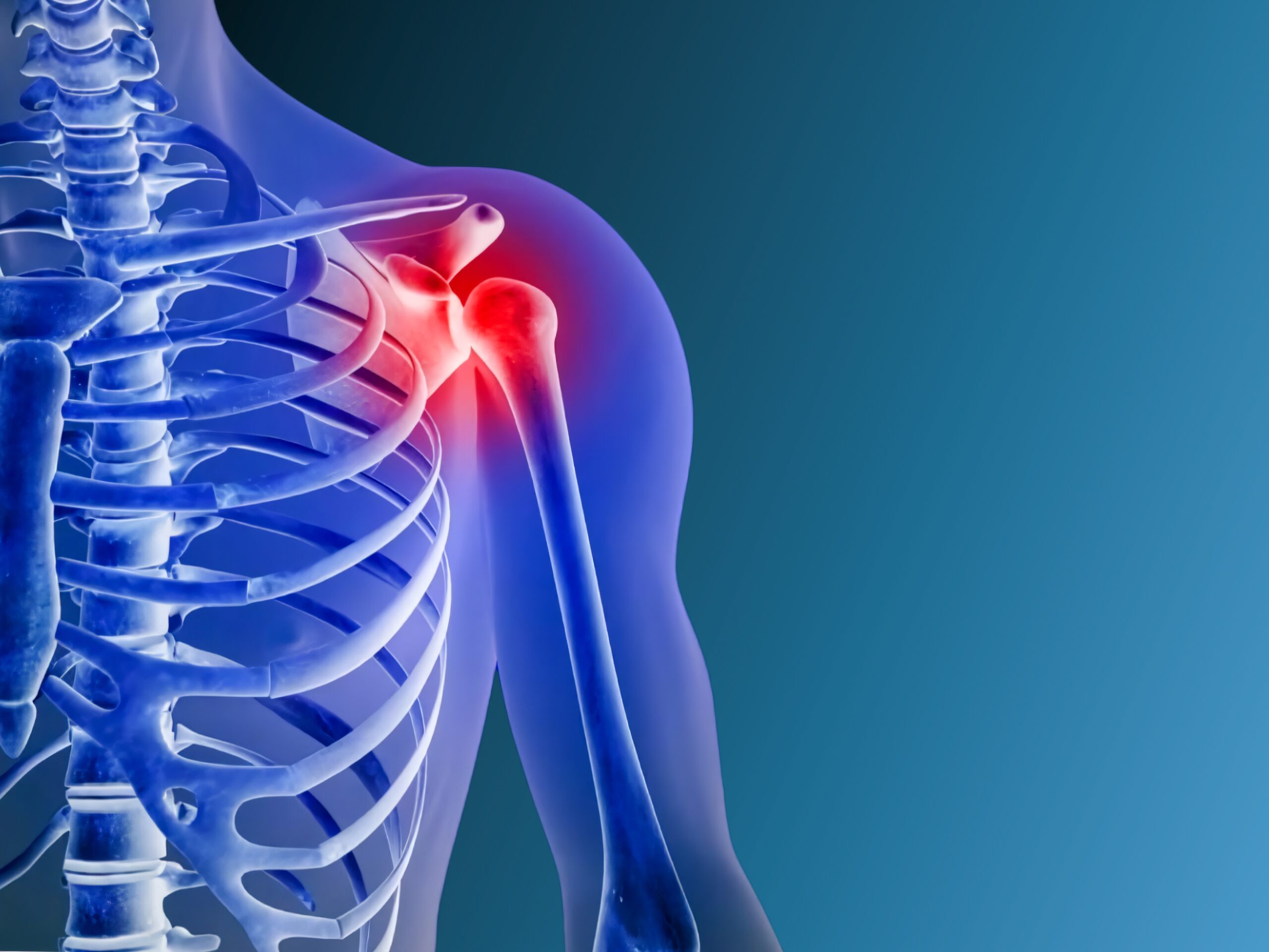
To understand shoulder impingement syndrome, it is necessary to briefly analyze the anatomy of the region. The shoulder is a joint with the greatest range of motion in the human body. The head of the humerus (the upper part of the arm bone) comes into contact with the scapula (shoulder blade). Above the head of the humerus, there is a bony roof called the acromion.

The space created between the head of the humerus and the acromion is called the subacromial space. Through this narrow anatomical “corridor” pass the tendons of the rotator cuff of the shoulder, which are responsible for the stability and movement of the arm, as well as the subacromial bursa (a small sac of fluid that acts as a “cushion” to reduce friction).

Shoulder impingement syndrome constitutes a generalized concept and is the result of a vicious cycle of friction of the shoulder tendons between the upper part of your arm bone (humeral head) and the roof of your shoulder blade (acromion). This friction leads to swelling, inflammation, and narrowing of the subacromial space, causing intense pain and difficulty in movement. The more the space narrows, the more friction increases when lifting the arm, exacerbating the inflammation and creating a perpetual cycle of pain.

Ο μόνος Ορθοπαιδικός στην Ελλάδα στην χειρουργική ώμου και άνω άκρου με προϋπηρεσία μόνιμης διευθυντικής θέσης (substantive Consultant ) για 10 συναπτά έτη στην Μεγάλη Βρετανία

Who gets shoulder impingement?

This condition does not discriminate, as it can appear both in young and highly active individuals, as well as in older patients due to tissue degeneration.

Sports Activities and Strain

The condition is frequently observed, but not exclusively, in individuals involved in sports and other activities that entail overhead rotation of the shoulder – such as swimming, basketball, volleyball, tennis, crossfit, and weightlifting. Repeated movements of the arms above head level exert immense mechanical pressure on the tendons, causing micro-injuries that gradually progress into chronic inflammation.

Daily and Occupational Activities

However, it is not only athletes who are at risk. Daily activities such as washing windows, painting, gardening, or placing items on high shelves can trigger the syndrome. Moreover, professionals such as painters, carpenters, builders, and hairdressers present particularly high rates of the condition.

Poor Body Posture in the Digital Age

Poor body posture is a significant factor that causes it during sports or warm-up, but also during daily work at the office or at home when someone works for several hours on the computer. When we slouch forward, the shoulder blades shift, resulting in the subacromial space narrowing anatomically on its own. Thus, even a simple movement of the arm can cause friction.

Acute Injury

Impingement syndrome can also result from an injury, such as a fall onto an outstretched hand or directly onto the shoulder. In these cases, the sudden trauma causes immediate swelling in the bursa or the tendon, abruptly narrowing the available space for movement.

How is impingement syndrome caused?

The tendons of the shoulder pass through a space beneath the acromion. The acromion is the bone at the top and outer part of the shoulder blade. Impingement occurs when the tendon rubs or “impinges” against the acromion.

The main causes of impingement are:

  • Inflammation or Tear of the Tendons (Tendinitis / Rotator Cuff Tear): The tendon or tendons have a tear or inflammation. This may be due to overuse from repetitive shoulder activity, injury, or wear and tear that can be age-related. When a tendon becomes inflamed, it swells (thickens), occupying more space, a fact that makes the impingement even more intense.
  • Subacromial Bursitis: The bursa is significantly inflamed due to overuse of the shoulder or injury. The bursa is the sac or cushion between the tendons and the acromion. Normally, the bursa helps the muscles and tendons move and “glide” over the bones. However, when it becomes irritated, it fills with excess fluid, swells, and turns into a source of intense pain.
  • Anatomical Variations of the Acromion (Bone Spurs): The bone of the acromion is often not flat (it either tilts toward the tendon or is shaped like a hook), and this predisposes to and ultimately causes mechanical friction on the tendons. Over time, the formation of bone spurs (calcium deposits or bone “hooks”) on the underside of the acromion dramatically reduces the subacromial space.

What are the symptoms of shoulder impingement syndrome?

Symptoms usually manifest gradually. In the initial stages, the patient may feel just a mild discomfort, which, however, over time turns into a persistent and sharp pain that limits the functionality of the upper limb.

The main symptoms of impingement syndrome are:

  • Pain during lifting: Pain when the arms are raised above the head or during movement within a specific arc (usually between 60 and 120 degrees).
  • Pain during lowering: Pain when the patient lowers the arm from an elevated position.
  • Radiating pain: Pain that moves from the front of the shoulder to the side of the arm (up to the deltoid muscle or even lower toward the elbow).
  • Pain when lying down: Pain when one lies on the affected side, making the process of finding a comfortable position impossible.
  • Night pain: Pain at night that negatively affects the frequency and quality of sleep (night pain), waking the patient up during the night.
  • Restriction of daily life: Pain in the patient’s self-care, such as for example when dressing, fastening a bra, combing hair, or trying to reach for the car seatbelt.
  • Muscle weakness: Significant weakness of the shoulder and limitation of the range of motion. The patient feels that their arm “has no strength” to lift even light objects.

Symptoms typically develop gradually over weeks to months. If left untreated, chronic inflammation can lead to permanent stiffness and more severe damage.

Correlation with Other Shoulder Conditions

It is important to note that impingement syndrome is closely related to other common shoulder conditions which appear in isolation or in combination. The most common can be tendinitis or calcific tendinitis (calcium deposits in the tendons), tendon tears (partial or complete detachment of the rotator cuff), acromioclavicular arthritis, and frozen shoulder (adhesive capsulitis that causes complete immobility of the joint).

How is shoulder impingement syndrome diagnosed?

Timely and valid diagnosis is the key to avoiding permanent damage to the tendons. The process followed is completely personalized and based on modern medical protocols.

Mr. Polyzois will see the patient at his clinic, take their specific shoulder history, and examine them carefully. During the clinical examination, specific diagnostic tests are performed (such as the Neer and Hawkins tests), where the doctor moves the patient’s arm in specific ways to reproduce the impingement and locate the exact spot of the lesion.

Next, the patient will be sent for plain X-rays of the shoulder to rule out osteoarthritis and calcific tendinitis, among others. X-rays also help to study the shape of the acromion and determine if bone spurs are present. In some severe cases, the significant reduction of the subacromial space and the impingement on the underlying bones are clearly visible.

Mr. Polyzois will then, in some cases, send the patient for an ultrasound or magnetic resonance imaging (MRI) to rule out tendon tears and to have a full and detailed depiction of all the soft tissues of the joint and the index of inflammation. Magnetic resonance imaging offers maximum accuracy, showing if there is a partial or total tear of the tendons that requires immediate restoration.

How is shoulder impingement treated?

The therapeutic approach depends on the stage of the condition, the intensity of the symptoms, and the daily needs of the patient. The goal is always the elimination of pain and the complete restoration of movement.

Conservative Treatment

In the initial stages, management includes conservative treatment such as:

  • Rest and activity modification: Avoidance of movements that cause pain (mainly work or sports with the arm above the head).
  • Ice therapy: Application of ice for 15-20 minutes, several times a day, to reduce local swelling.
  • Anti-inflammatory medications: Non-steroidal anti-inflammatory drugs (NSAIDs) or ointments to control pain and inflammation under medical guidance.
  • Specific physiotherapy program: Targeted exercises to strengthen the rotator cuff muscles and the stabilizers of the scapula, aiming to widen the subacromial space naturally.
  • Cortisone injections: Local injection into the subacromial space for an immediate and powerful anti-inflammatory effect in cases of intense pain that does not subside with medication.
  • Platelet-Rich Plasma (PRP) injection: A modern biological treatment that uses growth factors from the patient’s own blood to accelerate the healing of inflamed tendons.

However, when conservative treatment fails to offer permanent relief after a few months, or when there is a structural problem (such as a large bone spur or severe tendon tear), the solution is provided through modern surgery. However, the definitive surgical treatment is shoulder arthroscopy.

Arthroscopic Shoulder Surgery – Affordable Cost

Minimally invasive treatment takes place if conservative treatment does not relieve the pain. Shoulder arthroscopy constitutes the global “gold standard” for the definitive treatment of subacromial impingement syndrome.

The surgery is performed by the certified and specialized shoulder surgeon Mr. Polyzois and his team. It is completely painless and bloodless, and lasts on average just 30 minutes.

Awake Surgery

One of the most modern and innovative approaches applied by our team is awake surgery. The patient can remain awake throughout the entire duration if they wish, of course, and the specialized anesthesiologist of the team administers regional anesthesia without general anesthesia or sedation. This means that only the arm to be operated on is anesthetized. In this way, the side effects of general anesthesia (nausea, dizziness, lethargy) are avoided, and recovery is extremely fast. A few hours later, the patient is discharged from the hospital, and the results are truly impressive.

How is the Arthroscopic Technique Performed?

The arthroscopic technique aims for the complete relief of pain. The technique uses 2-3 percutaneous incisions of 4 millimeters. Through these holes, the surgeon inserts a microscopic high-definition camera (arthroscope) and “decompresses” the subacromial space of the shoulder with special tools, and repairs anything else that is pathological and causing pain.

During the procedure (which is also called subacromial decompression or acromioplasty), the doctor removes the inflamed bursa and “files” the bone spur or the protrusion of the acromion that rubs against the tendons. Thus, a wide and smooth space is created anew, allowing the tendons to move freely without any friction. If a tendon tear is identified during the arthroscopy, it is repaired simultaneously using special absorbable anchors.

A Few Words About the Doctor (Dr. Polyzois)

Orthopedic Surgeon Mr. Polyzois constitutes one of the most specialized scientists in the field of shoulder and upper limb surgery in Greece. He is the only Orthopedic surgeon in Greece in shoulder and upper limb surgery with a prior permanent directorial position (substantive Consultant) for 10 consecutive years in Great Britain.

Mr. Polyzois has specialized in these techniques and is certified in globally recognized centers. He has also served as a permanent Director for 10 continuous years in London and has completed over 7,000 arthroscopic procedures around the shoulder. His vast clinical experience and his specialization in top hospitals of the National Health Service of Great Britain (NHS) guarantee the implementation of the most advanced, safe, and internationally recognized surgical methods.

Orthopedic Surgeon Mr. Polyzois and his team offer a personalized and definitive solution to the pain and the problem of each patient, no matter how simple or complex it may be. Success rates for the patient are particularly high in a professional yet friendly environment at a very affordable cost. Contact him to receive your own personalized diagnosis.

Cost and Prices for the Management of Shoulder Impingement Syndrome

One of the most frequent questions of patients concerns the financial aspect of the treatment. In our clinic, we firmly believe that top medical care and specialized health services must be accessible to every person who needs them.

For this reason, our philosophy is based on maintaining a particularly affordable and fair cost for all medical acts, treatments, and surgical operations. The final cost is always formed in a completely personalized way, as it depends on factors such as:

  • The type of treatment (conservative, biological PRP treatments, or surgical arthroscopy).
  • The need for simultaneous repair of other coexisting lesions (e.g., suturing tendon tears, removing calcifications).
  • The specific materials that may be required (e.g., arthroscopic tools, anchors).

Our team works closely with the largest private insurance companies, as well as with public insurance bodies (EOPYY), ensuring the maximum possible coverage of hospitalization and surgery expenses, so that the burden on the patient remains at the minimum possible level. During your first visit, and once the diagnostic approach is completed, you will receive full and detailed information about the cost, without hidden charges, tailored to your own capabilities.

Movement is life! Contact the doctor for specialized orthopedic care, tailored to your needs.

Η κIνηση εIναι ζωH!

Επικοινωνήστε με τον γιατρό για εξειδικευμένη ορθοπαιδική φροντίδα, προσαρμοσμένη στις ανάγκες σας

Συχνές ερωτήσεις

What is impingement syndrome?

Shoulder impingement syndrome (or subacromial impingement) is the painful condition that results when the rotator cuff tendons and the bursa rub and are repeatedly pressed against the acromion bone during shoulder movement, causing inflammation, swelling, and pain.

What can cause impingement syndrome?

It can be caused by intense sports activity (swimming, tennis, basketball), manual labor with arms raised high, poor body posture (many hours at the computer), anatomical features of the acromion bone (bone spurs, curved acromion), or by a sudden injury after a fall.

How long does shoulder arthroscopy for impingement syndrome last?

The operation is extremely fast due to the use of modern tools and the doctor’s high specialization. On average, the procedure lasts about 30 minutes.

Is general anesthesia required for the surgery?

Not necessarily. Thanks to our team’s modern techniques, the option of “awake surgery” is offered. The specialized anesthesiologist administers regional anesthesia (blocking the nerves of the shoulder), allowing the patient to be awake without feeling any pain at all and avoiding general anesthesia.

When can I return home after the surgery?

Shoulder arthroscopy is a Day Clinic operation (one-day hospitalization). The patient is admitted to the hospital on the day of surgery and is discharged a few hours after its completion, returning safely to the comfort of their home.

Is the postoperative period painful?

The arthroscopic method is minimally invasive, which means that postoperative pain is minimal compared to older “open” surgeries. In addition, the regional anesthesia continues to act for several hours after the surgery, while subsequent management is easily done with simple painkillers.

When can I drive again after arthroscopy?

Returning to driving depends on whether a simple decompression was performed or if a tendon suture was also required. In simple cases of subacromial decompression, the patient can usually drive safely within 1 to 2 weeks, depending on the progress of rehabilitation.

Can impingement syndrome be fully cured without surgery?

In the initial stages, where inflammation is mild and there are no bony narrowings or tendon tears, conservative treatment (physiotherapy, rest, PRP) can offer full and permanent relief. If, however, symptoms persist for more than 3-6 months, arthroscopy is deemed necessary for the definitive solution.

What will happen if I neglect the symptoms and do not receive treatment?

If impingement syndrome is left without proper management, continuous friction can lead to gradual wear and tear and eventually to a complete tear (ripping) of the rotator cuff tendons. This causes permanent loss of strength, severe stiffness (frozen shoulder), and premature development of osteoarthritis in the joint.

When can I return to my sports activities?

Returning to sports is done gradually. For mild activities and running, the return can happen in a few weeks. For sports that require arm movements above the head (e.g., tennis, swimming, volleyball), a period of 2 to 3 months of targeted strengthening is usually required for full and safe reintegration.