How is the Diagnosis performed?
Early diagnosis is the key to avoiding the complete destruction of the joint. Mr. Polyzois will take a detailed and specialized medical history and will ask you, among other things, about the duration of your symptoms, any previous injury in the past, the characteristics of the pain (whether it is sharp or continuous), and any activities or hobbies that exacerbate the condition.
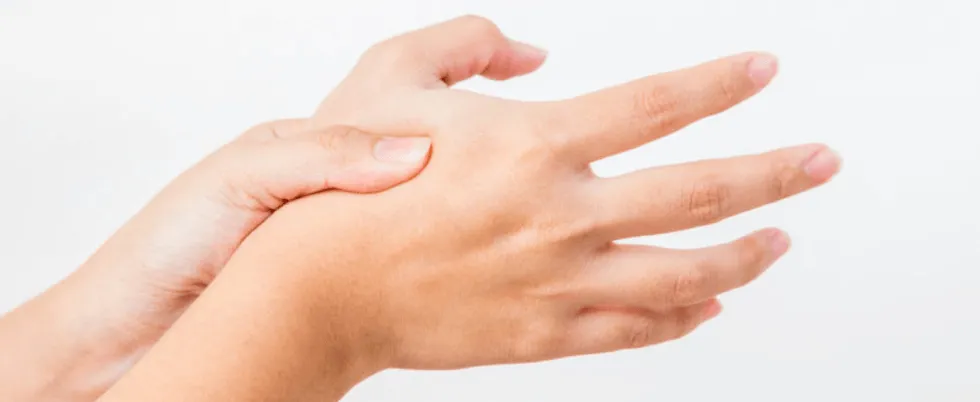
During the clinical examination, the doctor will carefully observe your thumb for swelling and deformity. One of the most reliable clinical tests used is called the Grind Test (Compression and Rotation Test). During this test, the doctor holds the wrist joint firmly, presses the metacarpal of the thumb downward, and simultaneously rotates (moves) it. If sharp pain arises or if an intense crepitus (a grinding sound like gravel) is heard and felt in the joint during movement, this means that the protective cartilage is absent, the bones are rubbing directly against each other, and the diagnosis is advanced osteoarthritis.
The clinical diagnosis is always confirmed with imaging examinations. A simple X-ray of the hand is usually more than enough and can clearly show:
- The narrowing of the joint space (meaning the disappearance of the cartilage).
- The deterioration and hardening of the underlying bone.
- Any bone spurs (osteophytes) or calcium deposits that have developed.
- The degree of subluxation of the joint.
It is important to note that some patients with arthritis at the base of the thumb simultaneously have symptoms of Carpal Tunnel Syndrome (numbness in the fingers) or De Quervain’s tenosynovitis. Mr. Polyzois will thoroughly check you for these accompanying conditions as well, so that the treatment is comprehensive.
Treatment of Thumb Arthritis
The goal of treatment is twofold: immediate relief from the debilitating pain and restoration of the functionality and strength of the hand. The approach depends strictly on the stage of the disease and the demands of the patient.
Non-Surgical (Conservative) Treatment
In its initial stages, arthritis at the base of the thumb can respond exceptionally well to non-surgical treatment. The protocol includes:
- Activity Modification: Adapting the way you use your hands. Using special tools with thick handles (e.g., thick pens, special jar openers) that reduce pressure on the joint.
- Medication: Non-Steroidal Anti-Inflammatory Drugs (NSAIDs), either in the form of pills or in the form of a topical cream/gel, help temporarily and effectively in reducing inflammation, swelling, and pain.
- Immobilization (Splint): The use of a functional, supportive splint (Thumb Spica Splint) is fundamental. This splint encompasses the thumb and wrist, restricting the movement of the joint and absorbing mechanical loads. It allows the joint to rest, the inflammation to calm down, and healing to take place. The splint can protect both the wrist and the thumb and can be worn all night or intermittently during the day, especially during heavy tasks.
- Intra-articular Cortisone Injections: Because arthritis is a progressive, degenerative disease, the condition can worsen over time despite the use of a splint. The next phase of treatment involves the infiltration (injection) of a solution of powerful steroids (cortisone) combined with a local anesthetic, directly into the affected joint. This offers rapid containment of the inflammation and can usually provide impressive relief for a few weeks, a few months, or – in some cases – for over a year, depending on the severity of the disease.
- Biological Treatments: In certain selected cases, injections with Platelet-Rich Plasma (PRP) or Hyaluronic Acid can offer additional protection and pain reduction.
Surgical Treatment
When the cartilage has been completely destroyed (bone rubs against bone) and non-surgical treatment (splints, injections) is no longer effective in controlling the pain, surgical operation constitutes the sole method that fully and definitively relieves the symptoms, returning functionality to the hand.
Mr. Polyzois is particularly experienced, officially certified, and specialized in modern upper limb surgeries, which include three different methods to rid the patient of arthritis and pain:
-
Arthrodesis (Joint Fusion)
In this technique, the damaged ends of the bones (the trapezium and the metacarpal) are “cleaned” of cartilage and permanently joined (“fused”) together using special osteosynthesis materials (small plates, screws, or special wires). As the bones fuse (weld) and become one, the joint ceases to exist, and consequently, the movement that was causing pain stops.
- Advantage: It offers complete and permanent relief from the pain of arthritis and creates an exceptionally strong thumb.
- Disadvantage: There is almost complete immobility and loss in the range of motion of this specific joint. It is indicated mainly for younger patients or for heavy manual laborers who require raw gripping power.
-
Thumb Arthroplasty (Joint Replacement)
Just as is done in the knee or the hip, the damaged joint is removed and replaced by an artificial joint (prosthesis) made of titanium and special polyethylene.
- Advantage: It fully preserves movement and normal anatomy.
- Disadvantage: Like all artificial materials, it can loosen or wear out over the passage of years.
-
Trapeziectomy and Ligament Reconstruction (LRTI)
This method constitutes the “gold standard” worldwide. It includes the complete surgical removal of the carpal bone (the trapezium), which suffers from arthritis. Once the bone is removed, the gap created is covered. Reconstruction of the remaining joint and ligaments takes place using a portion of an adjacent tendon from the patient’s own body (as a biological cushion – graft) and with the use of special sutures or suspension systems (anchors).
This method is increasingly gaining ground, as it rids the patient of pain, while preserving an excellent range of motion and does not utilize metal prostheses that can wear out. It is usually the method of choice in the hands of Mr. Polyzois, although the final choice is, of course, always personalized for each patient, depending on age, occupation, activities, as well as the exact condition of the basal thumb joint and the adjacent joints (stage of disease).
Surgical Procedure: Speed and Safety
In any case, the operation is designed to offer the least possible distress:
- Anesthesia: The operation is bloodless and entirely painless. General anesthesia is not required, as specialized regional anesthesia is utilized (only the hand is numbed – Awake Surgery), depending naturally on the desires of each patient.
- Minimal Invasiveness: The surgical technique is minimally invasive (MIS) and the incision does not exceed 4 to 5 centimeters, following the natural folds of the skin.
- Excellent Aesthetic Result: Careful healing and the use of intradermal absorbable sutures (which do not require removal) make the aesthetic result excellent.
- Immediate Return Home: The patient does not stay overnight. They are discharged (Day Clinic) a few hours after the surgery and usually wear a light, small functional splint for about two to four weeks, while they can and are encouraged to use the rest of their hand and other fingers normally from day one. Most importantly: The agonizing pain of arthritis is eliminated completely and immediately from the very first day after the surgery!