Αρθροπλαστική Αγκώνα

Elbow Arthroplasty

ΠΕΡΙΕΧΟΜΕΝΑ

The elbow joint is one of the most complex and critical joints in the human body. It functions simultaneously as a hinge, allowing the bending and straightening of the arm (flexion and extension), but also as a rotational axis, allowing the rotation of the forearm and the palm (pronation and supination). Any dysfunction in this joint has a direct and serious impact on our ability to perform basic daily movements, from eating and dressing to driving or lifting an object.

To understand the condition and the surgical solution, it is important to look at the anatomy of the area. The elbow essentially consists of 3 joints formed by the following three bones:

  • The Humerus: The long bone of the upper arm.
  • The Ulna: The bone of the forearm on the side of the pinky finger, which plays the main role in flexion and extension.
  • The Radius: The second bone of the forearm, on the side of the thumb, which allows the rotational movements of the hand.

The surfaces of these bones where they meet are covered by articular cartilage, a smooth and protective tissue that allows them to glide smoothly without friction or pain. When this cartilage is damaged, worn away, or destroyed, the exposed bones begin to rub against each other. This condition causes severe chronic pain, swelling, progressive stiffness, and significant loss of function. When conservative treatments fail to provide relief, elbow arthroplasty (total or partial joint replacement) stands as the most modern, safe, and effective surgical solution to restore movement and eliminate pain.

Ο μόνος Ορθοπαιδικός στην Ελλάδα στην χειρουργική ώμου και άνω άκρου με προϋπηρεσία μόνιμης διευθυντικής θέσης (substantive Consultant ) για 10 συναπτά έτη στην Μεγάλη Βρετανία

What is Elbow Arthroplasty?

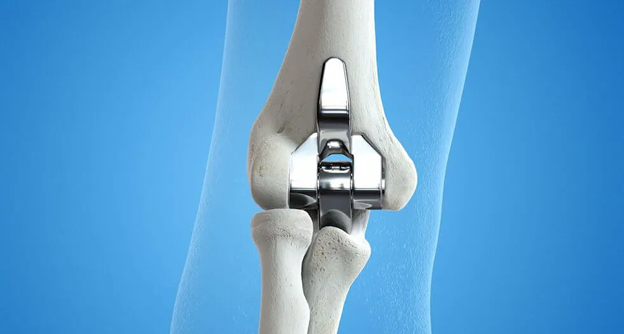
Elbow arthroplasty is a specialized and demanding orthopedic procedure during which the worn, damaged parts of the joint are removed and replaced with a high-tech artificial joint, known as a prosthesis or implant.

The artificial joint is typically made of high-strength, biocompatible materials, such as titanium or cobalt-chromium alloys, while a special component made of high-density polyethylene (a type of durable plastic) is placed between the metallic surfaces to function as the new “cartilage,” ensuring smooth and frictionless movement. Depending on the patient’s age, bone quality, and the specific pathology, the components of the prosthesis are fixed to the bones either with the use of special bone cement or through press-fit stabilization, where the bone gradually grows into the porous surface of the metal.

Types of Elbow Arthroplasty

Depending on the extent of the damage and the anatomical condition of the joint, the specialized orthopedic surgeon can choose between two main types of arthroplasty:

Total Elbow Arthroplasty

This is the most common form, during which all the worn surfaces of the joint are replaced (the lower end of the humerus and the upper end of the ulna). Total arthroplasty is divided into two categories:

  • Linked Arthroplasty (Linked / Hinged): The humeral and ulnar components are mechanically connected to each other with a special pin (hinge). This type provides absolute stability and is preferred in cases with severe bone loss, significant joint destruction, or complete insufficiency of the stabilizing ligaments.
  • Unlinked Arthroplasty (Unlinked): The two metallic components are not mechanically joined together. The stability of the artificial joint depends entirely on the integrity and strength of the patient’s own collateral ligaments and muscles. It is ideal for patients with good ligamentous support and lower levels of joint destruction.

Partial Elbow Arthroplasty (Hemiarthroplasty) 

In this case, only one part of the joint is replaced (usually the distal end of the humerus or the radial head), while the remaining healthy cartilage of the joint is preserved. This technique is typically indicated for specific types of acute, complex fractures in younger or active patients where the rest of the joint remains completely intact.

When is Elbow Arthroplasty Indicated? 

Elbow joint replacement is not a first-line treatment. It is considered only when chronic symptoms do not subside with conservative measures—such as specialized physical therapy, non-steroidal anti-inflammatory drugs (NSAIDs), modifications in daily activities, or targeted intra-articular injections—and the patient’s quality of life is severely affected. The most common indications include:

  • Severe Osteoarthritis: Degenerative wear and tear of the articular cartilage due to age or chronic mechanical strain.
  • Rheumatoid Arthritis: A chronic inflammatory autoimmune disease that attacks the synovial membrane and causes extensive, rapid destruction of the cartilage and stabilizing ligaments of the elbow.
  • Post-traumatic Arthritis: Severe wear of the joint that develops years after an old injury, a severe dislocation, or an intra-articular fracture.
  • Complex Commenuted Fractures: Severe, unstable fractures of the distal humerus or proximal ulna (especially in elderly patients with osteoporosis), where anatomical reconstruction and fixation with plates and screws are impossible.
  • Non-unions or Malunions: Cases where an old fracture failed to heal properly, leading to persistent pain, instability, and joint destruction.
  • Tumors: Malignant or benign bone tumors in the area of the elbow that require extensive bone removal.

Symptoms That Lead to the Surgical Decision

Patients candidates for an elbow arthroplasty usually experience a combination of severe symptoms that hinder basic everyday functions:

  • Severe, intractable pain: Pain that persists even during rest or sleep, wakes the patient up at night, and does not respond to strong analgesics.
  • Significant loss of motion (Stiffness): Inability to bend or straighten the arm sufficiently to perform basic self-care tasks, such as eating, brushing teeth, washing, or reaching the face.
  • Joint Instability: A feeling that the elbow is “giving way” or dislocating during simple movements.
  • Chronic swelling and inflammation: Persistent swelling around the joint accompanied by heat and redness, especially in cases of rheumatoid arthritis.

The Surgical Procedure Step-by-Step

Elbow arthroplasty is a highly specialized procedure that requires meticulous planning and execution by an expert upper limb surgeon.

Preoperative Preparation

Before the surgery, a comprehensive medical checkup (blood tests, ECG, chest X-ray, and evaluation by a cardiologist and anesthesiologist) is performed. Advanced imaging studies, such as a high-resolution CT scan or MRI, are often required to map out the bone anatomy and select the exact size and type of prosthesis.

During the Operation

  • Anesthesia: General anesthesia is usually administered, frequently combined with a regional nerve block (interscalene or axillary block) to keep the arm fully anesthetized and pain-free for several hours after the procedure.
  • Incision: The surgeon makes a longitudinal incision on the posterior aspect of the elbow, carefully identifying and protecting the ulnar nerve, which runs right next to the joint.
  • Preparation of the Bones: The worn and damaged surfaces of the humerus and ulna are carefully removed. The bone marrow canals are prepared using specialized instruments (reamers) to accommodate the stems of the prosthesis.
  • Trial Placement: Trial components are inserted first to assess the alignment, stability, and range of motion of the new joint.
  • Definitive Fixation: The permanent implants are inserted into position and fixed using bone cement or press-fit technique.
  • Closure: The tissues are meticulously sutured layer by layer, a temporary surgical drain may be placed to remove excess blood, and a sterile compression dressing or a lightweight splint is applied.

The surgery typically lasts between 90 and 120 minutes.

Benefits of Elbow Arthroplasty

When performed by an expert surgeon, total joint replacement offers impressive benefits:

  • Definitive Elimination of Pain: The primary and most dramatic result is the immediate relief from chronic, debilitating pain.
  • Restoration of Functionality: Patients regain a functional range of motion that allows them to perform daily activities independently and without assistance.
  • Correction of Deformities: The alignment of the arm is fully restored, correcting chronic deformities caused by severe arthritis or poorly healed fractures.
  • Rapid Improvement in Quality of Life: The return to a normal, pain-free daily routine improves the patient’s physical and psychological well-being.

Postoperative Recovery and Rehabilitation

The success of an elbow arthroplasty depends heavily on the postoperative rehabilitation program, which must be tailored to the specific patient and conducted in close cooperation with a specialized physical therapist.

The First Days

  • The arm is kept elevated on pillows to reduce swelling.
  • Ice therapy is applied systematically.
  • Gentle finger and wrist movements are encouraged immediately to promote blood circulation and prevent stiffness.
  • Pain is managed effectively through a combination of intravenous and oral medications.

Weeks 1-2 

  • Gentle, passive and active-assisted range of motion exercises for the elbow begin early, under the guidance of the therapist, to prevent joint stiffness and adhesions.
  • The surgical incisions must be kept completely clean and dry.
  • Sutures are typically removed between 10 to 14 days postoperatively.

Weeks 3-6 

  • The range of motion is gradually expanded, focusing on achieving full flexion and functional extension.
  • The patient can start using the hand for very light daily activities, such as holding a cup of water, eating, or writing.
  • Lifting objects heavier than 1-2 kilograms is strictly prohibited during this initial healing phase.

Beyond Week 6 

  • Gentle strengthening exercises for the surrounding muscles (biceps, triceps, forearm muscles) are gradually introduced.
  • Most patients can return to driving once they have achieved adequate control and motion of the arm without significant pain.

Potential Complications 

Like any major surgical procedure, elbow arthroplasty carries certain risks, though they remain low when performed by an experienced specialist:

  • Infection: A serious complication (around 1-2%) that may require prolonged antibiotic treatment or a revision surgery.
  • Nerve Injury: Due to the proximity of the ulnar nerve, temporary numbness or weakness in the fingers can occur, which usually resolves over time.
  • Implant Loosening: Over many years, the components can loosen from the bone due to wear, which may require a replacement of the prosthesis (revision arthroplasty).
  • Joint Stiffness: If early physical therapy is neglected, the joint can develop scar tissue and become stiff.
  • Periprosthetic Fracture: A fracture of the bone around the metallic stems, which can occur during the operation or later due to a fall.

Tips for Long-Term Protection of the Joint 

To maximize the lifespan of your artificial elbow and avoid premature wear or loosening, it is essential to follow specific guidelines for life:

  • Adhere to Weight Restrictions: This is the most crucial rule. Patients with a total elbow arthroplasty should avoid lifting heavy weights permanently. As a general rule, a repetitive load limit of 2-3 kg and a single maximum load limit of 5 kg is recommended.
  • Avoid Contact Sports and High-Impact Activities: Activities that involve a risk of falling, sudden impacts, or heavy stress on the upper limbs (such as martial arts, weightlifting, tennis, padel, or heavy manual labor) should be avoided. Beneficial activities include swimming, walking, and gentle cycling.
  • Prophylactic Antibiotics: Since you carry a foreign body (implant) in your organism, bacteria that enter the bloodstream during subsequent medical or dental procedures (such as tooth cleaning or extractions) can travel to the elbow and cause a late infection. You must always inform your dentists or doctors so they can prescribe a single dose of prophylactic antibiotics before any invasive procedure.
  • Protect the Arm from Falls: Take extreme care to prevent falls by avoiding slippery surfaces, using proper footwear, and ensuring a safe home environment.
  • Maintain Regular Follow-Ups: Schedule routine clinical and radiographic checkups with your orthopedic surgeon to monitor the condition of the implant over the years.

A Few Words About the Doctor (Mr. Polyzois) 

Elbow arthroplasty is considered one of the most demanding surgeries in orthopedics, requiring an exceptionally high level of specialized training and surgical experience. Orthopedic Surgeon Mr. Polyzois provides a guarantee for the safe and successful management of your condition.

He is the only Orthopedic Surgeon in Greece specializing in shoulder and upper limb surgery (which includes the complex anatomy of the elbow and hand) who has held a permanent directorial position (substantive Consultant) for 10 consecutive years in the National Health Service (NHS) of Great Britain. Having successfully performed a vast number of joint replacements and complex reconstructions abroad, he applies the most stringent and advanced international medical protocols, providing his patients with world-class, individualized care.

Cost and Prices for Elbow Arthroplasty 

The financial cost of an elbow arthroplasty is structured on a strictly individual basis, depending on the specific type of condition, the exact implant required (linked vs. unlinked, partial vs. total), and the length of hospital stay.

Our clinic’s philosophy is that top-tier medical care and specialized surgical treatments must be financially accessible. We maintain full transparency with no hidden fees and offer complete cooperation with all private insurance providers. Additionally, our collaboration with the public health provider (EOPYY) allows for a significant reduction in clinical expenses, medication, and hospitalization costs. Following your clinical evaluation and a detailed review of your imaging tests, you will receive a comprehensive and analytical financial proposal tailored to your needs.

Do not allow chronic pain and stiffness to restrict your independence. Contact the Doctor and his team today for an expert solution to your problem.

Η κIνηση εIναι ζωH!

Επικοινωνήστε με τον γιατρό για εξειδικευμένη ορθοπαιδική φροντίδα, προσαρμοσμένη στις ανάγκες σας

Συχνές ερωτήσεις

Can I sleep on the operated side after the surgery? 

No, sleeping directly on the side of the operated elbow should be strictly avoided for at least 6 to 8 weeks postoperatively. This precaution protects the surgical incision from direct pressure, reduces the risk of skin breakdown or fluid collection, and allows the deep tissues and ligaments to heal undisturbed. The ideal position is sleeping on your back or on the opposite side, with the operated arm supported comfortably on a soft pillow.

Will the implants trigger metal detectors at the airport? 

Modern elbow prostheses are made of advanced metal alloys (such as titanium or cobalt-chromium) which can occasionally trigger highly sensitive security scanners at airports or secure buildings. Although it is not legally mandatory, it is highly recommended to request an official medical implant certificate or confirmation card from your surgeon. Carrying this documentation allows you to inform security personnel promptly and pass through checkpoints without delays.

How long does a total elbow arthroplasty typically last? 

The longevity of an artificial elbow joint depends significantly on the patient’s daily activity level, bone quality, and adherence to postoperative restrictions. Statistically, modern elbow implants have a survival rate of approximately 85% to 90% at 10 years post-surgery. Faithful compliance with the lifetime weight-bearing limits (avoiding lifting heavy objects) and protecting the arm from repetitive mechanical stress or trauma are the most critical factors to ensure the maximum possible lifespan of the prosthesis.

Is physical therapy mandatory after the operation? 

Yes, systematic physical therapy is absolutely mandatory and non-negotiable for a successful outcome. Elbow arthroplasty provides the anatomical correction and eliminates the pain, but functional movement depends entirely on rehabilitation. The elbow is a joint that naturally tends to develop stiffness very quickly. Without a structured, early program of passive and active exercises conducted by an experienced therapist, the joint can form dense scar tissue, which will permanently limit your range of motion.