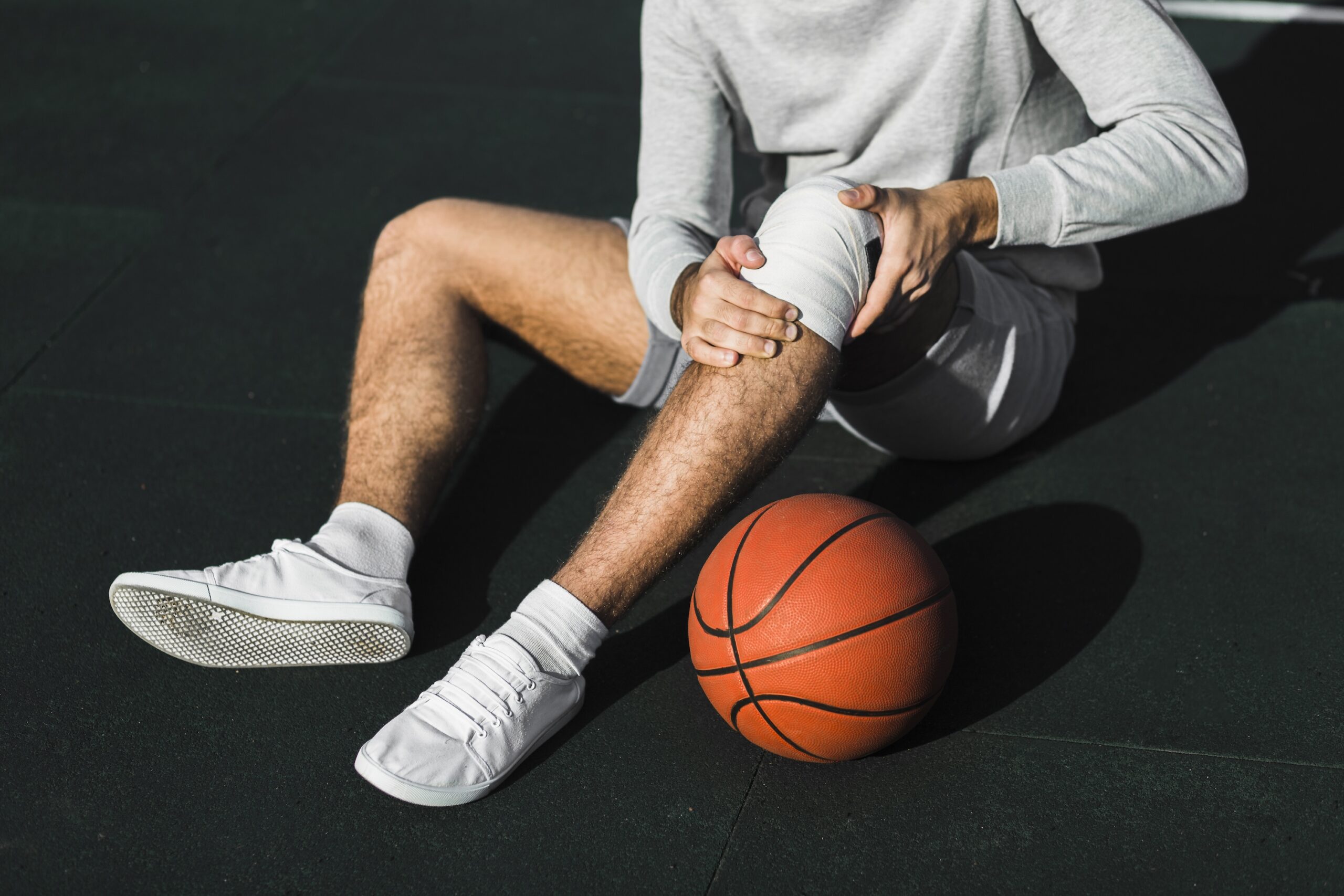
Αθλητικές Κακώσεις

Sports Injuries

ΠΕΡΙΕΧΟΜΕΝΑ

With the term sports injuries (or athletic injuries), we refer to a broad category of injuries and conditions of the musculoskeletal system that can arise during any sports activity, physical exercise, or even during demanding daily movements. Despite the fact that exercise constitutes the “A to Z” for staying healthy, improving cardiovascular function, and shielding our immune system, it often carries various, unpredictable risks. Sports injuries are an exceptionally common phenomenon both in top-level professional athletes and in amateurs who exercise for recreation (e.g., in a 5×5 football match, a padel match, running, or at the gym) during a workout or a game. Nonetheless, it is important to emphasize that these types of injuries can also occur in individuals not directly connected to sports, who perform abrupt movements, lift weights in their daily routine, or have muscle imbalances.

Ο μόνος Ορθοπαιδικός στην Ελλάδα στην χειρουργική ώμου και άνω άκρου με προϋπηρεσία μόνιμης διευθυντικής θέσης (substantive Consultant ) για 10 συναπτά έτη στην Μεγάλη Βρετανία

What are Sports Injuries, and how are they classified?

Human anatomy is designed for movement; however, every joint, tendon, and muscle has specific endurance limits. When the forces exerted on the body exceed these limits, an injury occurs. Sports injuries are traditionally divided into two major categories, depending on their mechanism of creation:

Acute Injuries 

They happen suddenly, usually after a direct impact, fall, abrupt change of direction, or an incorrect landing. They are characterized by immediate, acute pain, edema (swelling), and an inability to continue the activity (e.g., ankle sprain, cruciate ligament tear, fracture).

Chronic Injuries (Overuse Syndromes) 

They develop gradually over time. They are caused by repetitive micro-strains (micro-trauma) to the tendons, bones, or joints, without giving the body the necessary healing time. The pain usually appears during exercise or immediately after, and worsens over time (e.g., Achilles tendinitis, epicondylitis – tennis elbow).

Who is more exposed to sports injuries?

Sports injuries do not discriminate and are observed both in younger ages (children and adolescents) and in older age groups. The name “sports injuries” stems from the fact that individuals with the highest probability of presenting this specific condition are those subject to systematic or occasional athletic activity.

  1. Professional and Systematic Athletes 

Due to daily strain, the high intensity of workouts, and the pressure of competitive sports, their tissues often function at their limits. The risk of presenting both acute injuries (due to speed and contact) and overuse syndromes is immense.

  1. Weekend Warriors 

This represents a huge risk category. We refer to individuals who, due to sedentary work and lack of time, do not exercise at all during the week but try to make up for the gap by participating in very intense sports activities (e.g., football games, basketball, or hours of running) over the weekend. The body, not being conditioned for this sudden burst of energy, succumbs very easily to strains and tears.

  1. Children and Adolescents 

The musculoskeletal system of children is under continuous development. Bones often grow faster than muscles and tendons, creating a natural “tension” that renders the growth plates (the development points of the bones) particularly vulnerable to injuries, such as Osgood-Schlatter disease in the knee.

  1. Older Individuals and Obese Individuals 

As mentioned, besides young athletes, older individuals or those with increased body weight can also come face-to-face with sports injuries. The normal wear and tear of tissues (tendon degeneration, reduced elasticity), combined with the extra pressure that body weight exerts on the joints (primarily in knees and hips), dramatically increases the risk.

What causes sports injuries? 

The causes that can bring about sports injuries vary and often constitute a combination of intrinsic (of the body itself) and extrinsic factors. Chiefly, the most common causes include:

Incorrect or Incomplete Warm-up

This is perhaps the number one cause of injuries in amateur sports. “Cold” muscles and tendons are rigid, inelastic, and do not receive adequate blood supply. If subjected to a sudden, intense contraction (such as a sprint or a jump), it is highly likely they will suffer a strain or a tear. Proper warm-up increases body temperature, blood circulation, and tissue elasticity.

Incorrect Recovery (Cool-down) 

Many exercisers stop exercising abruptly without performing stretches and a gradual reduction of their heart rate. The absence of a cool-down leads to lactic acid accumulation, muscle spasm, loss of flexibility, and an increased probability of injury during the next workout.

Use of Incorrect Equipment 

Unsuitable equipment is a decisive factor. From worn-out or inappropriate athletic shoes (which do not absorb shock and alter the biomechanics of the foot, leading to stress fractures or tendinitis) to a wrong racket size (which causes epicondylitis), equipment must be tailored to the sport and the athlete.

Intense Pressure and Overtraining Syndrome 

When athletes push themselves beyond normal limits, ignoring the warning signs of pain or fatigue (overtraining), the body does not have time to repair micro-damage to tissues. This chronic pressure weakens tendons and bones, rendering them “time bombs” ready to undergo serious damage.

Bad Technique and Incorrect Biomechanics 

Performing exercises with incorrect posture (e.g., deep squats with a bad angle at the knees) transfers loads to the joints instead of the muscles, leading to rapid wear of the cartilage and ligaments.

What are the types of sports injuries? 

Sports injuries can make their appearance across the entire length and regions of the body; however, for the most part, the injuries that occur most frequently concern the lower part of our body (legs, knees, ankles), as these bear all the weight and forces of movement. The basic types into which sports injuries are distinguished are the following:

Sprains 

They involve the distension (stretching) or tear of ligaments, the durable tissues that connect bones. The ankle is the most common site for a sprain.

Muscle Tears / Strains 

They involve the partial or total rupture of muscle fibers, usually following excessive stretching or an abrupt contraction (e.g., strain of the biceps femoris or gastrocnemius).

Tendon Tears 

Tendons connect muscles to bones. Their rupture (such as the rupture of the Achilles tendon) is among the most serious injuries, causing an inability to move and frequently requiring immediate surgical intervention.

Fractures 

They can be acute (following a powerful collision, e.g., a broken tibia) or “stress fractures” (micro-cracks in the bone created by repetitive strain and continuous running on hard surfaces).

Dislocations (Anatomical Displacements) 

They occur when a powerful force pushes the bones of a joint out of their normal position (e.g., shoulder or patellar dislocation). This is an emergency requiring immediate reduction.

Open Wounds and Cartilage Lesions 

They include abrasions, lacerations, as well as damage to the articular cartilage (the smooth surface covering the bones), which, if left unaddressed, lead to premature osteoarthritis.

What are the most common sports injuries? 

Certain injuries appear with immense frequency in orthopedic clinics due to the nature of modern sports (football, basketball, skiing, and padel). Some of the most common injuries are:

  1. Meniscus Tear 

The meniscus functions as a “shock absorber” in the knee, absorbing impacts and distributing weight evenly. Its tear usually occurs with an abrupt twisting movement of the knee while the foot is firmly planted on the ground. It causes pain, swelling, and often the sensation that the knee is “locking” or “catching”.

  1. Anterior Cruciate Ligament (ACL) Tear 

Perhaps the most feared injury in football and basketball. The cruciate ligament is the main stabilizer of the knee. Its tear is often accompanied by a characteristic sound (“pop”), immediate edema, and terrible instability (the knee “gives out”).

  1. Shoulder Dislocation 

The shoulder is the joint with the greatest range of motion, but for this exact reason, it is also highly unstable. Falls with an outstretched hand (e.g., in skiing or football) can force the head of the humerus out of its socket. If it happens once, the chances of recurrence increase dramatically (habitual dislocation).

  1. Rotator Cuff Tear 

Very common in throwing sports, swimming, tennis, and weightlifting. The tendons of the rotator cuff wear down and can tear, causing intense pain and an inability to raise the arm above head level.

  1. Achilles Tendon Rupture 

The strongest tendon in the body. It undergoes immense loads during jumps and abrupt accelerations. Its tear feels like a “strike from a stone or a kick” to the back of the calf, and the athlete is unable to stand on their tiptoes.

  1. Tendinitis and Overuse Syndromes 

Inflammations such as patellar tendinitis (jumper’s knee), Achilles tendinitis, iliotibial band syndrome in runners (runner’s knee), and elbow epicondylitis. They represent a plague for those who exercise intensively without the correct periodicity of rest.

What are the symptoms of sports injuries?

Depending on the type of injury created and the area in which it appears, clinical symptoms differ; however, certain warning signs must never be ignored. The most common symptoms are the following:

Sudden, Acute Pain 

Particularly during exercise (in acute injuries) or a deep, persistent pain that worsens after the end of the workout (in chronic ones).

Reduced Range of Motion 

The inability to bend, straighten, or rotate a joint as usual.

Sensation of Tenderness 

Pain during palpation (touching) of the specific muscle, tendon, or bone.

Appearance of Edema (Swelling) 

This is the body’s normal reaction to an injury, as fluid and blood accumulate in the area to initiate healing.

Appearance of Hematoma (Bruising) 

Due to the internal rupture of small blood vessels, mainly following muscle strains.

Bleeding 

In cases of open wounds or comminuted fractures.

Sensation of Instability 

The feeling that the joint “gives out” or cannot support your weight (characteristic of ligamentous tears).

In cases where the injury is not identified immediately or the way it is managed by the athlete themselves is not the most appropriate (e.g., if they continue to play through pain), then the symptoms may manifest more intensely after a few hours or days, once the body “cools down” and adrenaline drops.

How is the diagnosis performed? 

A correct and timely diagnosis is the absolute secret for a full and safe return to the sports fields or daily routine. It is extremely important that the patient, if they notice any of the above symptoms, stop the activity immediately, avoid pushing themselves, and contact their doctor to arrange a visit. The specialized Orthopedic Surgeon, in order to recommend the appropriate, individualized treatment to the patient, performs a thorough clinical examination.

The process includes:

Study of Medical History 

The doctor takes a detailed history regarding the exact mechanism of the injury (how, when, and what movement preceded it), pain levels, and a history of older injuries.

Clinical Examination 

Through specific orthopedic tests of palpation, resistance, stretching, and stability checks (e.g., Lachman test for the cruciate ligament), the doctor pinpoints the source of the problem.

Imaging Examinations 

If deemed necessary to confirm the diagnosis and determine the extent of the damage, they will recommend:

  • Plain X-Rays: For the immediate exclusion of fractures and bone lesions.
  • Ultrasound: Ideal for quick evaluation of superficial tendons and muscle strains.
  • Magnetic Resonance Imaging (MRI): Constitutes the “gold standard” in sports injuries. It images all soft tissues (cartilage, menisci, cruciate ligaments, tendons) with spectacular detail, providing the complete and final picture of the injury.

Treatment of Sports Injuries 

Depending on the symptoms, severity of the injury, age, and medical history of the patient (the demands of their lifestyle), the appropriate treatment is recommended.

Conservative Treatment: The R.I.C.E. Protocol 

At the moment the injury occurred (and for the first 48-72 hours), the international R.I.C.E. protocol is recommended as a first line of defense, which includes:

  • Rest: Discontinuation of the activity to prevent further damage.
  • Ice: Application of ice to the affected area (for 15-20 minutes, never directly on the skin) to limit edema.
  • Compression: Elastic bandaging of the joint (with a bandage) for swelling reduction and mild stabilization.
  • Elevation: Elevation of the injured limb above heart level to facilitate fluid absorption.

In many cases of muscle strains (1st or 2nd degree), simple sprains, and mild tendinitis, conservative treatment—combined with targeted physical therapy, anti-inflammatory medications, and modern biological therapies (such as PRP injections – Platelet-Rich Plasma)—renders absolutely satisfactory for a full recovery. There are, however, many cases (such as total cruciate ligament tears, meniscus tears in young individuals, extensive tears of shoulder tendons, or fractures) where surgical management of the injury is deemed necessary so that the joint returns to 100% of its functionality and premature destruction is avoided.

Surgical Management of Sports Injuries 

Surgical management of sports injuries is provided in cases where it is deemed necessary to ensure the biomechanical stability of the body. For the most part, in the modern medical landscape, the method used for the surgical management of joint sports injuries (knee, shoulder, ankle) is Arthroscopic Surgery. This specific minimally invasive method has brought a revolution to sports medicine. Through 2-3 microscopic incisions of a few millimeters, a high-definition camera (arthroscope) and special micro-tools are introduced, allowing the surgeon to see the joint internally on a monitor and repair the damage with absolute precision.

Arthroscopy possesses many advantages over older, open surgeries, some of which are:

  • Modern and safe techniques: Large incisions are avoided (absence of scars), and the risk of infections is minimized.
  • Immediate mobilization: The patient feels minimal postoperative pain and returns home on the very same day (Day Clinic).
  • Effective and Fast Solution: Rehabilitation is rapid, allowing for a faster start of physical therapies and a drastic reduction in time away from sports fields.

A Few Words About the Physician (Dr. Polyzois) 

Addressing demanding sports injuries requires top-tier medical specialization. Orthopedic Surgeon Mr. Polyzois is the only Orthopedic Surgeon in Greece specializing in shoulder and upper limb surgery with a permanent directorial tenure (substantive Consultant) for 10 consecutive years in Great Britain. His tenure in the strict and highly demanding environment of the National Health Service of Great Britain (NHS) endowed him with massive surgical experience, having completed thousands of successful arthroscopic surgeries. Through his continuous engagement with high-profile patients and athletes, the doctor combines the latest international Sports Medicine protocols with innovative, minimally invasive techniques, with the sole objective of fast, safe, and definitive treatment of the problem, approaching each patient with humanity, respect, and honesty.

Cost – Prices for the Management of Sports Injuries 

The occurrence of an injury constitutes a stressful experience on its own, and we fully understand that the financial factor plays an important role for every patient. The philosophy of our clinic is that medical excellence and specialized orthopedic care must be accessible. The final cost of managing a sports injury is strictly individualized, as it depends directly on the nature of the injury, the treatment method (conservative approach with PRP injections versus arthroscopic restoration), the specific bio-materials (such as fixation anchors or grafts), and the hospitalization time that may be required.

In order to minimize the financial burden on the patient, there is direct cooperation with public insurance providers (EOPYY), alongside flexible cooperation with all private insurance companies for the coverage of surgical expenses. Following the clinical examination and diagnosis, you will receive completely transparent, detailed, and clear information regarding all choices and corresponding costs, so that you can proceed to treatment without any anxiety.

Movement is life! Contact the doctor for specialized orthopedic care, tailored to your needs.

Η κIνηση εIναι ζωH!

Επικοινωνήστε με τον γιατρό για εξειδικευμένη ορθοπαιδική φροντίδα, προσαρμοσμένη στις ανάγκες σας

Συχνές ερωτήσεις

How quickly should a sports injury be treated?

The speed of reaction is of critical importance. An acute injury should ideally be evaluated by an Orthopedic Surgeon within the first 24 to 48 hours. A delay in diagnosis can turn a simple inflammation into a chronic injury, or a partial tendon tear into a total one, dramatically increasing recovery time and the likelihood of needing surgical intervention.

Can I continue to exercise if I have mild pain?

The answer is usually “no”. Pain is the body’s defense mechanism, warning you that some tissue is wearing down. If you continue to push yourself while ignoring the pain (especially if the pain is acute or forces you to alter the way you walk/run), you risk seriously worsening the injury. Safe practice involves discontinuing the activity and seeking medical evaluation.

When is an injury considered “chronic”?

An injury shifts into the “chronic” category when the pain and symptoms (such as stiffness and edema) persist for a period longer than 3 to 6 months, despite any initial rest. Chronic injuries indicate that the tissue has failed to heal properly, and chronic inflammation or scar tissue has developed.

What is the difference between an acute and a chronic injury?

Their basic difference lies in the mechanism and the time of manifestation. An acute injury occurs instantaneously, usually due to a specific event (e.g., a wrong step, a collision, a harsh landing) and causes immediate, intense pain. Conversely, a chronic injury develops “silently” and gradually, due to repetitive strain on the same area (overuse) over weeks or months, with the pain intensifying progressively.

How important is the role of rest?

Rest (or otherwise “active unloading”) is not just important, but absolutely critical for treatment. The body possesses amazing self-healing mechanisms, which, however, need time and the absence of pressure to function. Non-compliance with the doctor’s rest instructions is the most common cause of recurrence in sports injuries. Even after the pain subsides, a gradual—and not abrupt—return to sports is imperative.