




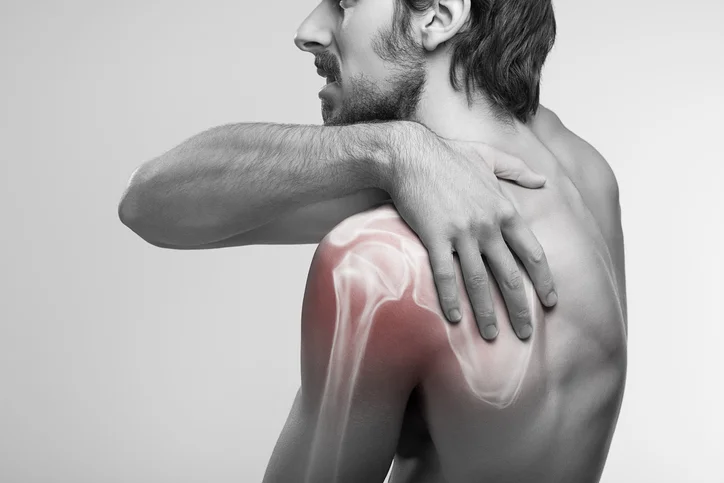
The shoulder joint is by nature unstable, and a partial or total traumatic dislocation becomes very likely, especially during exercises and sports. Most frequently, the shoulder joint is the most prone to instability and dislocations than any other joint in the human body. What happens, however, when a shoulder dislocation occurs for the second time?
What is a shoulder dislocation?
When a patient dislocates their shoulder for the first time, the risk of a second shoulder dislocation is particularly high, and episodes of partial dislocation are a given. Depending on the age and the type of sport in which they participate, a further traumatic dislocation requires surgical restoration. At the same time, following a personalized program of exercises for the fastest time within the framework of rehabilitation is an equally necessary prerequisite.
Shoulder dislocation for the second time: symptoms
In several cases, the symptoms of shoulder dislocation for the second time do not differ from the first episode of shoulder dislocation. More specifically, the most common symptoms are the following:
- Pain: Intense pain, particularly at the moment of injury and during shoulder movement
- Deformity: edema, swelling, and redness appear
- Loss of movement and numbness in the entire arm
Shoulder dislocation for the second time: What must be done first?
During a shoulder dislocation, first aid must be given by specialized medical personnel, ideally by an Orthopedic Surgeon with specialization in shoulder conditions. The movements and the reduction maneuver in the second dislocation are specific and must be performed with safety and speed. The patient should put ice on their shoulder for the first 48 hours for 15-20 minutes of the hour, for 5-6 hours each time. A second dislocation of the shoulder implies surgical restoration with special techniques by a specialized shoulder Orthopedic Surgeon.
Who runs a risk of a second shoulder dislocation?
The most prone to shoulder dislocation for the second time are:
- Professional athletes run a particular risk of a second shoulder dislocation
- Younger athletes: The younger a person is when they dislocate their shoulder for the first time, the greater the risk of the shoulder continuing to come out of the joint during activity. If someone is under 20 years old when they dislocate their shoulder for the first time, they have a 95% probability of a second dislocation.
- Female athletes with loose joints: Female athletes are more flexible than men. They are also more likely to have loose joints. Female athletes with loose joints run a very high risk of a second shoulder dislocation.
The risk of a second shoulder dislocation depends on age. A loose and muscularly weak shoulder joint plays an important role both in the appearance and the treatment of the second shoulder dislocation. The distribution is as follows:
- Patients under 20 years old: 72-100% probability
- Patients between 20-30 years old: 70-82% probability
- Patients over 50 years old: 10-22% probability
The second risk factor that must be taken into account is the type of sport in which the patients participate. Shoulder dislocation for the second time is observed in the following sports:
- Kayaking/Surfing
- Climbing
- Parachuting/free falls
- Mountain skiing/water skiing
- Volleyball/Basketball
Second shoulder dislocation: treatment
The treatment of the second shoulder dislocation focuses on restoring the stability of the joint and preventing future recurrences. Choosing the appropriate treatment depends on the severity of the condition and the patient’s lifestyle. If the shoulder dislocation is recurrent and appears for a second time, then conservative treatment does not yield results. Thus, most of the time, surgical intervention is needed to stabilize the joint.
- Arthroscopic Stabilization (shoulder arthroscopy): This arthroscopic surgical intervention involves the reconnection and suturing of the tear of the ligaments and the labrum of the shoulder joint. This helps restore safety and stability. Arthroscopy is a bloodless, painless treatment performed with absolute precision by Mr. Polyzois, with patients usually going home a few hours after the surgical intervention.
- Open minimally invasive Surgery – Coracoid Transfer (also known as Latarjet Procedure): This is a surgical technique that involves transferring a piece of bone from the scapula to the front part of the shoulder blade. In this way, it helps keep the ball in the socket of the shoulder joint, offering the shoulder extra stabilization and reducing the probability of a repetitive shoulder dislocation.
A shoulder dislocation for the second time can be accompanied by painful symptoms, while if it is not managed appropriately, it can create recurrences. Do not let pain restrict your activities! Contact the leading shoulder Orthopedic Surgeon, Mr. Polyzois, and his specialized team for a personalized treatment plan that will help you return to your favorite activities with safety and confidence. Book your appointment today!