




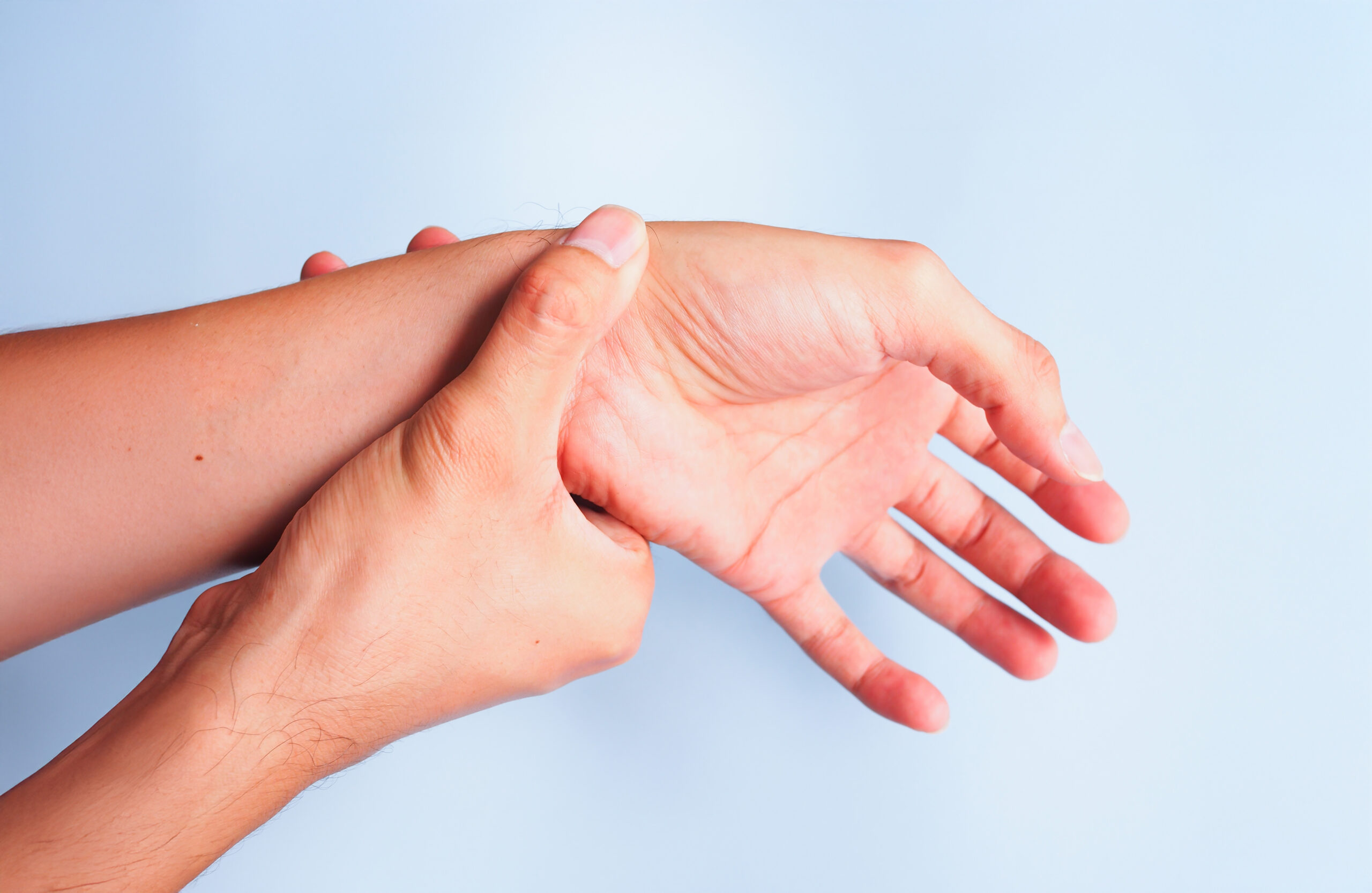
The use of our hands and especially the thumb is fundamental for almost every activity of our daily life, from holding a cup to typing on a smartphone or lifting a child. The freedom of movement of the thumb is secured by a complex system of tendons, which function like ropes transferring power from the forearm muscles to the fingers. When these tendons are overloaded and become inflamed, daily life can turn into an exceptionally painful experience.
One of the most characteristic and agonizing conditions of this region is De Quervain’s Tendinitis (or Syndrome). This syndrome took its name from the Swiss surgeon Fritz de Quervain, who described it for the first time in 1895, and until today constitutes one of the most frequent reasons for visiting specialized upper limb orthopedics.
What is thumb tendinitis or de Quervain’s tendinitis?
De Quervain’s tendinitis is an exceptionally common, inflammatory condition that is particularly painful, as two specific tendons of the thumb – which are responsible for the extension (opening outward) and abduction of the thumb – are affected by intense inflammation and thickening.
To understand the mechanism of the condition, we must know a few things about the anatomy of the wrist. The tendons that move the fingers are not loose under the skin. In order to function properly and not bowstring outward, they pass through narrow tunnels called sheaths. The sheath is a protective lining containing lubricating fluid.
In the region of the wrist, exactly at the base of the thumb (in the first dorsal compartment), two specific tendons pass together through a very narrow, common tunnel:
- The extensor pollicis brevis
- The abductor pollicis longus.
When these tendons overuse, friction is created. Friction causes inflammation, which in turn makes the sheath (the tunnel) swell, thicken, and become narrower. Simultaneously, the tendons themselves enlarge. This specific tendinitis constitutes, therefore, a preeminent syndrome of overuse and entrapment, as the enlarged tendons are “strangled” and trapped within their narrow tunnel every time the patient attempts to move the thumb, causing intense, piercing pain.


