
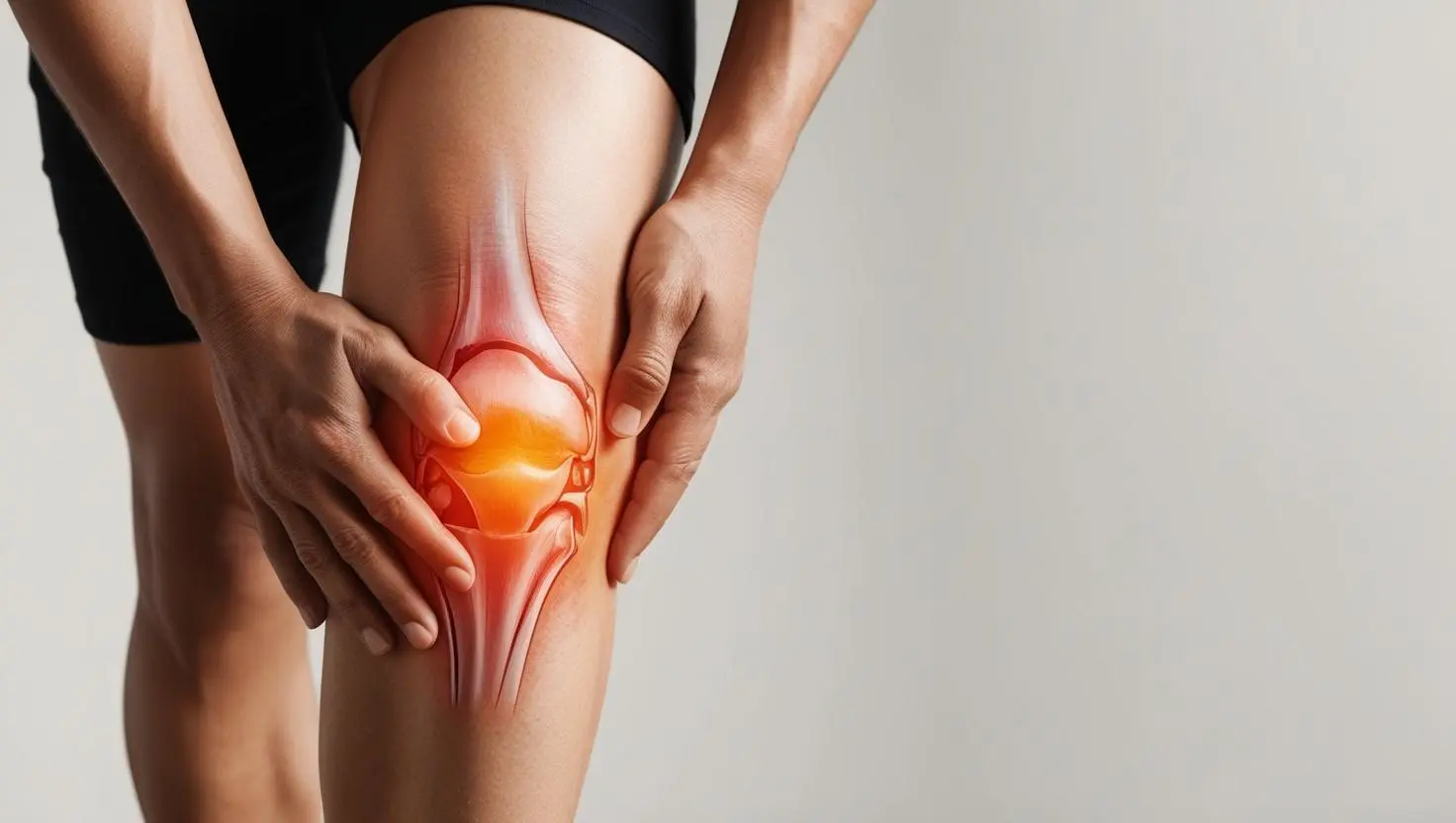
Knee Arthritis

ΠΕΡΙΕΧΟΜΕΝΑ

Knee arthritis is one of the most common causes of chronic pain and disability in adults over 50 years of age. It affects millions of people worldwide, dramatically reducing their quality of life and limiting their ability to enjoy simple daily activities, such as walking, climbing stairs, or even a restful night’s sleep.

As an Orthopaedic Surgeon, I treat patients with every stage of knee arthritis on a daily basis, from the initial symptoms to the most severe cases. My aim through this analytical guide is to explain to you with clarity and scientific accuracy what exactly is happening in your knee, what the modern therapeutic options are, and how you can regain a life without pain, regardless of the stage of the disease.

It is important to dispel from the outset the myth that knee arthritis is an inevitable part of ageing that we must simply accept. Modern Orthopaedic science has at its disposal a wide range of therapeutic tools, from personalised physiotherapy programmes and biological therapies to advanced arthroplasty techniques. With the right strategy, even patients with advanced knee arthritis can regain their quality of life. Furthermore, early intervention in the initial stages can significantly delay the progression of the disease and postpone any surgical treatment for years. Information and proper medical guidance are the key to effectively managing the problem.

Chronic knee pain is the most characteristic symptom of knee arthritis and the most frequent reason patients seek specialised medical assistance. Correct diagnosis and staging of the disease are critical to selecting the appropriate treatment.

What Is Knee Arthritis?

Knee arthritis is a progressive, degenerative condition of the joint, characterised by the wear of the articular cartilage. The articular cartilage is a smooth, white, elastic covering that lines the joint surfaces of the bones (femur, tibia, patella), allowing the harmonious and painless movement of the joint.

When this cartilage begins to wear progressively, the harmonious movement gives way to friction between the bones themselves. Inflammation develops, along with osteophytes (“spurs” at the edges of the joint), thickening of the synovial membrane, and progressive deformity of the limb (usually varus or “bow-legged” appearance). The process is irreversible; however, the symptoms can be effectively controlled.

Types of Knee Arthritis

Not all arthritides are the same. We distinguish the following basic types, each with a different pathogenesis and therapeutic approach:

Primary Osteoarthritis

This is the most common type and is due to the degenerative wear of the cartilage with the passage of time. It appears mainly in people over 50 years of age, more frequently in women, and is related to genetic factors, age, and lifestyle.

Post-traumatic Arthritis

It appears after a serious injury of the knee, such as a fracture, ligament tear, or meniscal tear, that has been left untreated. It may manifest at younger ages, even 5–10 years after the initial injury.

Rheumatoid Arthritis

It is an autoimmune, chronic inflammatory disease that affects many joints of the body, including the knee. It usually manifests with symmetrical involvement and requires cooperation with a rheumatologist.

Gouty Arthritis

It is caused by the deposition of uric acid crystals in the joint. It is characterised by acute episodes with intense pain, redness, and heat.

Avascular Necrosis

A rarer condition, in which the blood supply to a portion of the bone is interrupted, resulting in the gradual necrosis and collapse of the joint surface.

Ο μόνος Ορθοπαιδικός στην Ελλάδα στην χειρουργική ώμου και άνω άκρου με προϋπηρεσία μόνιμης διευθυντικής θέσης (substantive Consultant ) για 10 συναπτά έτη στην Μεγάλη Βρετανία

Risk Factors: Who Is at Greater Risk

The development of knee arthritis is multifactorial. The main risk factors include:

  • Age: The frequency increases progressively with age, with most cases appearing after 50.
  • Obesity: Every extra kilogram excessively loads the knee joint, with a fourfold load during walking.
  • Genetic predisposition: Family history plays an important role in the development of the disease.
  • Sex: Women, especially after the menopause, develop knee arthritis more frequently.
  • Previous injuries: Meniscal tears, cruciate ligament tears, or fractures predispose to post-traumatic arthritis.
  • Occupational burden: Professions with continuous use of the knees (bending, kneeling, lifting weights).
  • Limb deformities: Varus (“bow-legged”) or valgus (“X-shaped” legs).
  • Muscle weakness: Particularly of the quadriceps, which is the main stabiliser of the knee.

Symptoms of Knee Arthritis

The symptoms of knee arthritis develop progressively, with the passage of time. In the initial stages they are often mild and appear only after intense activity, while in the advanced stages they become daily and persistent. The main ones are:

  • Pain: This is the main symptom. Initially it appears only after activity or at the end of the day, while progressively it becomes constant, disturbing even at night.
  • Morning stiffness: The knee is stiff during the first morning hours or after prolonged immobility. It subsides with movement within 15–30 minutes.
  • Crepitus: A characteristic sound (“creaking” or “cracking”) during the movements of the knee, due to the rough, exposed bone surfaces.
  • Swelling: The joint may swell periodically, particularly after exertion.
  • Restriction of range of motion: Gradual loss of full flexion and extension of the knee.
  • Limb deformity: In advanced stages, visible deformity appears, usually inward (varus).
  • Muscle weakness: Due to reduced use, the quadriceps muscle exhibits gradual atrophy.
  • Difficulty in daily activities: Difficulty climbing/descending stairs, rising from a seated position, walking for long distances.

Diagnosis and Staging of the Disease

The diagnosis of knee arthritis is based on detailed clinical examination and imaging assessment. At my practice, I always begin with a detailed history, focusing on the chronicity of the pain, the aggravating factors, and the impact on your quality of life.

The clinical examination follows, with assessment of the limb deformity, the range of motion, the stability, and the signs of muscular atrophy.

Imaging Assessment

  • Digital X-rays: This is the examination of choice. They are performed in weight-bearing (standing position) and allow the evaluation of the joint space, the existence of osteophytes, the subchondral sclerosis, and any deformities.
  • Magnetic Resonance Imaging (MRI): Useful in the initial stages, or when there is suspicion of concomitant injuries (meniscal tears, cartilage lesions, necrosis).
  • Computed Tomography (CT): Used in specific cases, particularly in the preoperative planning of an arthroplasty.

Knee arthritis is categorised into 4 stages: from stage 1 (slight reduction of the joint space) to stage 4 (complete disappearance of the joint space, severe deformity). Staging is critical to the planning of the treatment.

Modern Therapeutic Management

The management of knee arthritis is stepwise and fully personalised. It begins with conservative options and progresses, if needed, to surgical solutions. I always propose the most effective, least invasive option for each patient, with the aim of relief from the symptoms and improvement of functionality.

Conservative Therapies

  • Lifestyle modification: Weight loss, avoidance of aggravating activities, use of appropriate footwear.
  • Pharmaceutical therapy: Paracetamol, non-steroidal anti-inflammatory drugs, chondroprotective supplements (glucosamine, chondroitin).
  • Physiotherapy: Targeted programme of strengthening the quadriceps and hamstrings, flexibility exercises, hydrotherapy.
  • Orthoses and aids: Special shoes, orthotic insoles, or knee braces in selected cases.

Intra-articular Injections

  • Corticosteroids: They provide rapid relief from pain and inflammation, with an action that lasts weeks to months.
  • Hyaluronic acid: Functions as a “lubricant” of the joint, improves mechanical ease, and may offer relief for 6–12 months.
  • PRP (Platelet Rich Plasma): A modern biological therapy with autologous platelet-rich plasma, which promotes healing and the inhibition of wear.

Surgical Solutions

  • Arthroscopic surgery: In selected cases (e.g. mechanical symptoms from a concomitant meniscal tear in mild arthritis). It is not a treatment for advanced knee arthritis.
  • Corrective osteotomy: In younger patients with single-compartment arthritis and deformity, the redistribution of loads through osteotomy can delay the need for arthroplasty.
  • Partial (unicompartmental) arthroplasty: When the wear concerns only one part of the joint (usually the medial). It is less invasive, with faster recovery and a more natural sensation of the knee.
  • Total knee arthroplasty: The definitive solution for advanced knee arthritis. All damaged joint surfaces are replaced with modern, high-technology prostheses. Success rates exceed 95%.

Modern total knee arthroplasty has evolved into one of the most successful surgical operations in Orthopaedics. Today’s prostheses are made of high-strength metals (cobalt-chromium alloy or titanium) and special, latest-generation polyethylene (cross-linked polyethylene), which presents excellent resistance to wear. With the help of three-dimensional preoperative planning (3D Planning), the placement is done with millimetric accuracy, ensuring the ideal alignment of the limb and the excellent function of the prosthesis. The operation is performed through a minimally invasive approach, with less surgical trauma, less blood loss, and faster recovery compared to older techniques. Patients today are mobilised on the same day of surgery and return home usually within 2–3 days.

Read in detail about knee arthroplasty, the types of prostheses, the preoperative preparation, the surgical procedure, and the complete programme of postoperative rehabilitation.

When Do I Need an Arthroplasty

Total knee arthroplasty is not proposed “prematurely”. It is reserved for patients in whom:

  • The pain is severe, daily, and affects sleep.
  • Mobility and autonomy are significantly restricted.
  • Conservative therapies have been exhausted without satisfactory results.
  • Imaging assessment shows advanced wear (stage 3–4).
  • Quality of life has been dramatically reduced.
  • There is a clear deformity of the limb.

With modern minimally invasive techniques and advanced materials, knee arthroplasty has evolved into one of the most successful operations in modern Orthopaedics.

Cost and Price of Knee Arthroplasty

One of the most important questions I receive from patients concerns the cost and price of the knee arthroplasty operation. This is understandable, as it is an important decision that will decisively affect the rest of your life.

It is important to understand that knee arthroplasty is not a standardised service but an extremely specialised medical procedure of great technical difficulty. The final cost and the price of the operation are shaped by many different factors:

  • The type of arthroplasty (total, partial/unicompartmental, revision).
  • The clinic or hospital chosen for the operation.
  • The days of hospitalisation (usually 2–4 days).
  • The type and quality of the implants (we use exclusively premium, latest-generation prostheses certified in the USA/Europe).
  • The severity of the case and any deformities that require special materials.
  • The use of three-dimensional preoperative planning (3D Planning) technology or robotic assistance.
  • The involvement of your insurance provider (EOPYY or private insurance).
  • The cost of anaesthesia and the specialised surgical environment.

For this reason, an accurate estimate of the cost and price can only be made after a full medical appointment, during which I will examine your imaging findings, evaluate the complexity of the case, and together we will design the optimal personalised treatment plan. I am committed to absolute transparency and full information at every step.

The Importance of Specialisation

Having served as a permanent Consultant in Orthopaedics in Great Britain (NHS) for 10 years, and having performed more than 9,000 arthroscopic and open operations, the treatment of knee arthritis at all stages is a central part of my clinical activity.

My extensive further training (fellowships) at internationally recognised centres enables me to apply the most modern therapeutic approaches, from biological therapies to advanced arthroplasty techniques with three-dimensional preoperative planning (3D Planning). Every patient is treated as a unique case. You can learn more about my work at drpolyzois.gr.

For more information about my curriculum vitae and my specialisations, my international academic course, and my long-term surgical experience in thousands of cases, you can visit the relevant page of the website.

A Life Without Pain Is Possible

Knee arthritis is not a fatal consequence of age, nor something that you must accept as inevitable. With modern diagnosis, specialised treatment, and the appropriate therapeutic approach, pain and limitation can become a thing of the past. Whether you are in the initial stages of the disease or the most advanced ones, there is always an effective solution.

Contact our practice today through the website drpolyzois.gr to schedule a diagnostic appointment. I will analyse your case in detail, answer all your questions, and together we will design the most appropriate therapeutic strategy, personalised to your needs and expectations, to regain the movement and quality of life that you deserve.

Η κIνηση εIναι ζωH!

Επικοινωνήστε με τον γιατρό για εξειδικευμένη ορθοπαιδική φροντίδα, προσαρμοσμένη στις ανάγκες σας

Συχνές ερωτήσεις

Is knee arthritis treated definitively?

There is currently no treatment that reverses the wear of the cartilage. However, with modern therapeutic approaches (conservative, biological, and surgical), the symptoms can be fully controlled, and the patient can regain a life without pain and limitations.

Is it worth losing weight for arthritis?

Absolutely. The loss of even 5–10% of body weight has been shown to significantly reduce pain and improve functionality. Every extra kilogram translates into a fourfold load on the knee joints during walking.

Can I exercise if I have knee arthritis?

Not only can you, but you should. Systematic, mild-intensity activity is recommended: swimming, stationary cycling, aquatic exercise, walking on level ground. Sports with high-impact loads are avoided (running on asphalt, sports with jumping).

How long do hyaluronic acid injections last?

Usually, 3 to 6 months, depending on the stage of the arthritis and the general condition of the joint. They can be safely repeated. They are an excellent option for moderate stages of arthritis.

How long does the knee arthroplasty last?

Modern implants have a lifespan of 20–25 years or more in over 90% of patients. This means that for the majority of patients, the operation constitutes a definitive solution.

Am I too young for a knee arthroplasty?

Age alone is not a criterion. In the past, arthroplasty was reserved for patients over 65–70 years of age. Today, thanks to the improvement of materials and techniques, it is applied with excellent results in younger patients (50–60 years), when their quality of life has been seriously affected.

How long until I return to my activities after the arthroplasty?

Patients usually walk with crutches on the same day of the operation. In 4–6 weeks, most patients return to the basic activities of daily life, while full recovery is achieved in 3–6 months, in cooperation with a targeted physiotherapy programme.

Is there a risk of complications after the arthroplasty?

Like every surgical operation, knee arthroplasty also carries theoretical risks, which are, however, minimal when the operation is performed by a specialised surgeon in a modern hospital environment. Possible complications include infection (1–2%), deep vein thrombosis (prevented prophylactically with anticoagulant therapy), joint stiffness, and mechanical loosening of the prosthesis over time. With adherence to modern protocols, the rates of complications are maintained at very low levels.

What restrictions will I have after the arthroplasty?

In the overwhelming majority of patients, the arthroplasty allows free participation in all daily activities without pain. Walking, swimming, cycling, golf, light tennis, and other mild sporting activities are allowed. Sports with high impact loads (running on hard surfaces, contact sports, and sports with jumping) are avoided in order to protect the prosthesis and extend its lifespan.