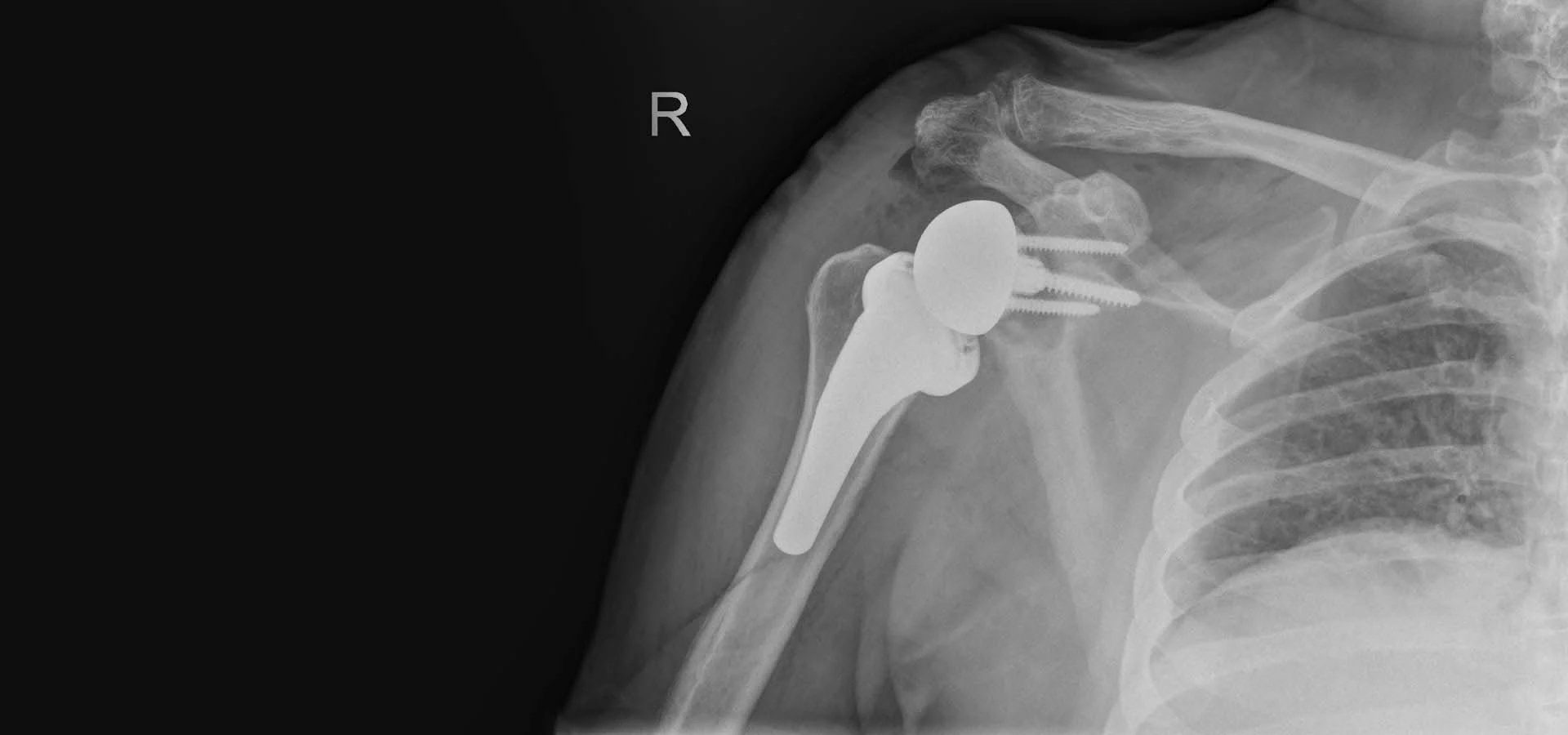
Reverse Shoulder Arthroplasty

ΠΕΡΙΕΧΟΜΕΝΑ

Reverse total shoulder arthroplasty is a special type of surgical replacement of the damaged parts of the shoulder with artificial components. It is called ‘reverse’ because, unlike the anatomically classic total shoulder arthroplasty, the surgeon reverses the positions of the joint surfaces.

Ο μόνος Ορθοπαιδικός στην Ελλάδα στην χειρουργική ώμου και άνω άκρου με προϋπηρεσία μόνιμης διευθυντικής θέσης (substantive Consultant ) για 10 συναπτά έτη στην Μεγάλη Βρετανία

Reverse Shoulder Arthroplasty: The Definitive Solution for Chronic Pain and Arthritis

The shoulder joint is one of the most complex and mobile joints in the human body. However, when natural wear and tear or a serious injury destroys it, the patient’s quality of life is dramatically reduced. Reverse shoulder arthroplasty is a revolutionary and highly specialised surgical procedure that has radically transformed the way we treat serious conditions in this area.

As an Orthopaedic Surgeon, my aim through this comprehensive guide is to explain to you with absolute clarity and scientific accuracy what exactly this operation involves, how its biomechanics work, which patients it is intended for, and how it can return you to a daily life free of pain and limitations.

What is Reverse Shoulder Arthroplasty?

Reverse shoulder arthroplasty is a specialised, advanced type of surgical replacement in which the damaged parts of the shoulder joint are replaced with state-of-the-art artificial components (prostheses). In a normal shoulder, the head of the humerus (the “ball”) fits into the glenoid (the “socket” or concave part of the scapula). This system is stabilised and moved by a group of tendons known as the rotator cuff.

It is called “reverse” because, in contrast to the anatomically conventional total shoulder arthroplasty (where the artificial components mimic the exact natural anatomy), the surgeon places the joint surfaces in reverse. In practical terms, the artificial metal ball is fixed to the socket of the scapula, and the artificial concave plastic component is placed on the top of the humerus.

This change in geometry is not random. It shifts the centre of rotation of the joint downwards and inwards. Biomechanically, this allows the large and powerful shoulder muscle, the deltoid, to take over entirely the task of raising the arm, bypassing the need for an intact rotator cuff.

In which cases is the operation applied?

Selecting the appropriate candidate is the key to success. Reverse shoulder arthroplasty is not applied for every type of pain, but is the treatment of choice for specific, very serious conditions. It is primarily applied in the following cases:

  • Rotator Cuff Tear Arthropathy: This is the main reason a patient undergoes this operation. When the tendons have suffered a massive, irreparable tear, the head of the humerus moves out of position and rubs against the bones, creating severe arthritis and pain — a phenomenon also known as “pseudoparalysis” of the shoulder.
  • Complex and comminuted fractures: Particularly in elderly patients, where bone quality is poor (osteoporosis) and reconstruction with plates and screws does not guarantee the viability of the joint. Reverse arthroplasty offers immediate stability.
  • Revision of a previous failed arthroplasty: When a previous conventional arthroplasty has loosened, become infected, or the tendons have been destroyed, reverse arthroplasty is used as a salvage procedure.
  • Severe osteoarthritis or rheumatoid arthritis: Especially when significant bone loss on the glenoid side (of the scapula) coexists, or deformities that make conventional arthroplasty impossible.
  • Chronic dislocations: When the shoulder frequently dislocates and has irreversibly damaged the stabilising structures.

The patients who come to my practice needing this operation usually suffer from intense, deep, and persistent pain in their daily life, which prevents them from sleeping at night. When conservative treatment (medication, targeted injections, physiotherapy) has definitively failed, surgery is the most reliable solution.

The Significant Advantages of the Method

The enormous advantage offered by reverse shoulder arthroplasty is its ability to restore function and movement without requiring the integrity of the tendons. While in conventional arthroplasty strength relies on the tendons, here the deltoid muscle takes over the task.

Other decisive benefits include:

  • Immediate pain relief: Most patients report a dramatic reduction in pain immediately after surgery.
  • Restoration of range of motion: The patient regains the ability to lift the arm above shoulder level, something that previously seemed impossible.
  • Joint stability: The very mechanics of the reverse prosthesis prevent the dislocation that patients with massive tendon tears often experience.

The Importance of Specialisation and Experience

As an Orthopaedic Surgeon, having served as a permanent Consultant in Orthopaedics in Great Britain (NHS) for 10 years, dealing with such complex cases is the core of my practice. I have undertaken extensive further training (fellowships) in reconstructive and arthroscopic surgery of the shoulder and upper limb at the largest centres abroad.

With a record exceeding 9,000 arthroscopic and open operations to date, I know well that the success of a reverse arthroplasty is decided in the detail, in excellent preoperative planning, and in flawless surgical technique. Every patient is unique. My aim is an entirely personalised approach to your particular case.

Preparation and Modern Preoperative Assessment

The success of the operation begins long before we enter the operating theatre. The preoperative assessment must be methodical, strict, and detailed.

Before the operation, you will need to undergo a series of examinations. Specialised X-rays, magnetic resonance imaging (MRI), and — most importantly — three-dimensional computed tomography (3D CT) are our tools. With the help of a specialised computer simulation programme (3D Preoperative Planning), I map your bone wear with millimetric precision.

This technology allows me to test virtually various sizes of prostheses, to select the ideal angle of inclination and the angle of insertion of the materials. This step is critical: it ensures maximum stability of the implants, protects the existing bone, and drastically reduces the duration of the operation, minimising the strain on your body.

In parallel, in cooperation with our team’s Anaesthesiologist, the most appropriate anaesthesia protocol is chosen, while your medical history, the medication you are taking, and full blood and cardiology examinations are thoroughly reviewed.

How is the surgical operation performed?

Reverse arthroplasty is performed under general anaesthesia, often combined with regional anaesthesia (interscalene block) for the complete elimination of postoperative pain. Its duration is usually around 60 to 90 minutes. In revision cases, where the removal of old materials is first required, the time may be longer.

Using Minimally Invasive Surgery techniques, the approach is made through a small, aesthetically acceptable incision, without unnecessary cutting or injury to the adjacent muscles and tissues.

The steps include:

  • Removal of the damaged, arthritic head of the humerus.
  • Preparation of the glenoid and placement of the metal spherical implant (the new “ball”), which is stabilised with a powerful central screw and additional peripheral screws for complete integration with the bone.
  • Placement of a metal stem inside the humerus, on which a special plastic insert (polyethylene) is fitted, forming the new “socket”.
  • Reduction of the joint, which now locks perfectly in its new reverse configuration, ensuring stability and excellent movement.

Case Study: Personalised Reverse Total Right Shoulder Arthroplasty

To help you better understand the impact of the operation, let us examine a real case from my practice.

A 59-year-old woman visited me complaining of unbearable pain in her right shoulder, which radiated throughout the arm. The stiffness was so severe that, as she characteristically told me: “I cannot use my arm at all, I cannot comb my hair or get dressed, and I am in relentless pain all day and every night”.

On clinical examination, an inability to actively raise the arm was identified (pseudoparalysis). A thorough imaging assessment with X-rays, CT, and MRI revealed the extent of the problem: the patient was suffering from severe deforming arthritis, accompanied by chronic, massive tear of the rotator cuff and significant bone deficits in the scapula.

We had three options:

  • Conservative treatment (injections, painkillers): Rejected, as due to the advanced destruction of the joint, this solution would have been merely a temporary masking of the symptoms.
  • Conventional total arthroplasty: Rejected, because the absence of the rotator cuff tendons would have made the conventional prosthesis unstable and non-functional.
  • Reverse total arthroplasty: The only definitive, medically indicated option.

Based on the three-dimensional plan (3D CT Planning), we precisely studied her bone deformities. The operation was designed so that the prosthesis would be placed in the ideal position to make maximum use of her healthy bone.

The operation and the outcome:

The surgical operation was completed with absolute success. The procedure was practically bloodless. What was impressive is that the patient was fully relieved from the chronic, agonising pain within just a few hours after recovery from anaesthesia. She was discharged the very next day.

She was able to take care of herself (for basic needs) from the first 24 hours. She wore a light arm sling for protection for about 10 days. Because a minimally invasive technique was used (without cutting muscles), her recovery was impressively quick. Today, weeks after the operation, she has fully returned to her daily life, enjoying an excellent range of motion, renewed strength, and above all, a life without any trace of pain.

Postoperative Course and Rehabilitation Programme

The healing process is just as important as the operation itself. The patient is usually mobilised immediately and returns home the day after the operation.

During the first days (usually 10–15), the arm is placed in a special sling to protect the soft tissues that are healing. However, movement of the fingers, wrist, and elbow begins immediately. As early as the third day, the patient is able to perform simple, light self-care movements (e.g. eating or light typing), always following our instructions.

A strictly designed physiotherapy programme is then necessary. We initially focus on passive movements to restore the range of the joint, and gradually, after the first weeks, we add active strengthening exercises, with emphasis on training the deltoid muscle, which is now the “engine” of your new shoulder.

Are there complications?

As a scientist, I have a duty to be absolutely honest: every surgical procedure carries theoretical risks. Reverse shoulder arthroplasty is a complex and technically demanding operation. However, with proper patient selection, modern materials, and specialised surgical technique, the rates of complications are minimal.

The possible complications (usually at a rate of less than 3–5%) include:

  • Infection: Managed with strict preventive antibiotic protocols and complete sterilisation of the operating room.
  • Dislocation of the prosthesis: Due to the reverse mechanics, if postoperative instructions are not followed (e.g. extreme movements of internal rotation and extension), the joint may dislocate.
  • Nerve injury: Rare, transient injury to adjacent nerves, which usually recovers fully.
  • Mechanical loosening or wear: Over time (15–20 years), the materials may undergo natural wear.

The choice of a specialised Orthopaedic Shoulder Surgeon is your best “shield” of protection against these risks.

Reverse Shoulder Arthroplasty: Cost and Price of the Operation

One of the most frequent questions from patients concerns the cost of reverse arthroplasty. It is important to understand that this is not an off-the-shelf product, but a complex medical procedure.

The final cost is shaped by many factors: the clinic/hospital chosen, the days of hospitalisation, the type and quality of materials (we use only premium, latest-generation implants certified in the USA/Europe), the severity of the case (e.g. if special bone grafts are needed in severe deformities), as well as the involvement of your insurance provider (e.g. EOPYY or private insurance).

For this reason, an accurate estimate of the cost can only be made after a full medical appointment, during which I will examine your imaging findings, evaluate the problem, and together we will plan the appropriate, personalised treatment plan.

Η κIνηση εIναι ζωH!

Επικοινωνήστε με τον γιατρό για εξειδικευμένη ορθοπαιδική φροντίδα, προσαρμοσμένη στις ανάγκες σας

Movement is life!

Pain and limited movement do not need to be an integral part of your daily life. Modern Orthopaedics has the solutions — provided they are applied correctly, with knowledge, expertise, and respect for the patient.

Contact our practice today to schedule a diagnostic appointment. We will study your tests, I will answer every question, and together we will design the most specialised orthopaedic care, fully tailored to your needs.

Meet the Doctor: Dr. Ioannis Polyzois

As an Orthopaedic Surgeon with absolute specialisation in conditions of the shoulder and upper limb, my primary goal is to offer you a safe, definitive, and scientifically documented solution to your problem.

Having served as a permanent Consultant in Orthopaedics in Great Britain (NHS) for more than 10 years, I have been called upon to manage and treat the most demanding and complex cases. My extensive further training at the largest centres of arthroscopic and reconstructive surgery worldwide enables me to apply the most modern international techniques in Greece.

To date, I have performed more than 9,000 arthroscopic and open surgical operations. This vast clinical and surgical experience makes me the most appropriate surgeon for the successful completion of high-difficulty operations, such as reverse shoulder arthroplasty. Every patient is unique, which is why my approach is always entirely personalised. I am here to listen to your problem with attention and, together, to plan your return to a daily life full of movement, without any trace of pain.

Συχνές ερωτήσεις

How many days are usually needed before I feel more functional after the operation?

Relief from the intense arthritic pain is usually immediate. As regards functionality, for simple, everyday activities at home (self-care without weight), most patients feel comfortable within the first 10 to 15 days. For a fuller, functional return, about 6 to 8 weeks are needed, in combination with physiotherapy.

When can I drive after reverse shoulder arthroplasty?

Driving requires excellent reflex control and good muscular strength. Generally, we recommend abstaining from driving for about 4 to 6 weeks. The exact moment depends on when you feel confident at the wheel, when the sling has been completely removed, and, of course, when you are no longer taking strong painkillers.

When can I return to work?

This depends entirely on the nature of your profession. If you have an office job (typing, computer), you can usually return in 2 to 3 weeks. If, however, your work requires manual activity or lifting weights, the absence may extend to 3 to 4 months.

Can I sleep on the operated side after the operation?

For the first month and a half (about 6 weeks), the answer is no. You must sleep on your back or on the healthy side, using a pillow under the operated arm for extra support. Once the first phase of internal tissue healing is complete, and after our consent, you will gradually be able to sleep on that side as well.

Will I be able to lift weights after the reverse arthroplasty?

Yes, but with limits. Reverse arthroplasty allows you to lift weights that cover all your daily needs (e.g. supermarket shopping, household items, a suitcase). However, extreme weights, weightlifting in the gym, or the use of impact tools (jackhammers) are contraindicated for life, in order to avoid premature wear or loosening of the artificial materials.

Is reverse arthroplasty suitable only for the elderly?

In the past, this operation was reserved exclusively for patients over 70–75 years of age with low physical demands. Today, however, thanks to the technological evolution of biomaterials (e.g. cross-linked polyethylene) and changes in prosthesis design, the indications have expanded considerably. It is now successfully applied to younger patients (e.g. 55–60 years old) suffering from destructive arthritis, severe fractures, or intractable tendon tears, with the aim of returning them to an extremely active and high-quality life.