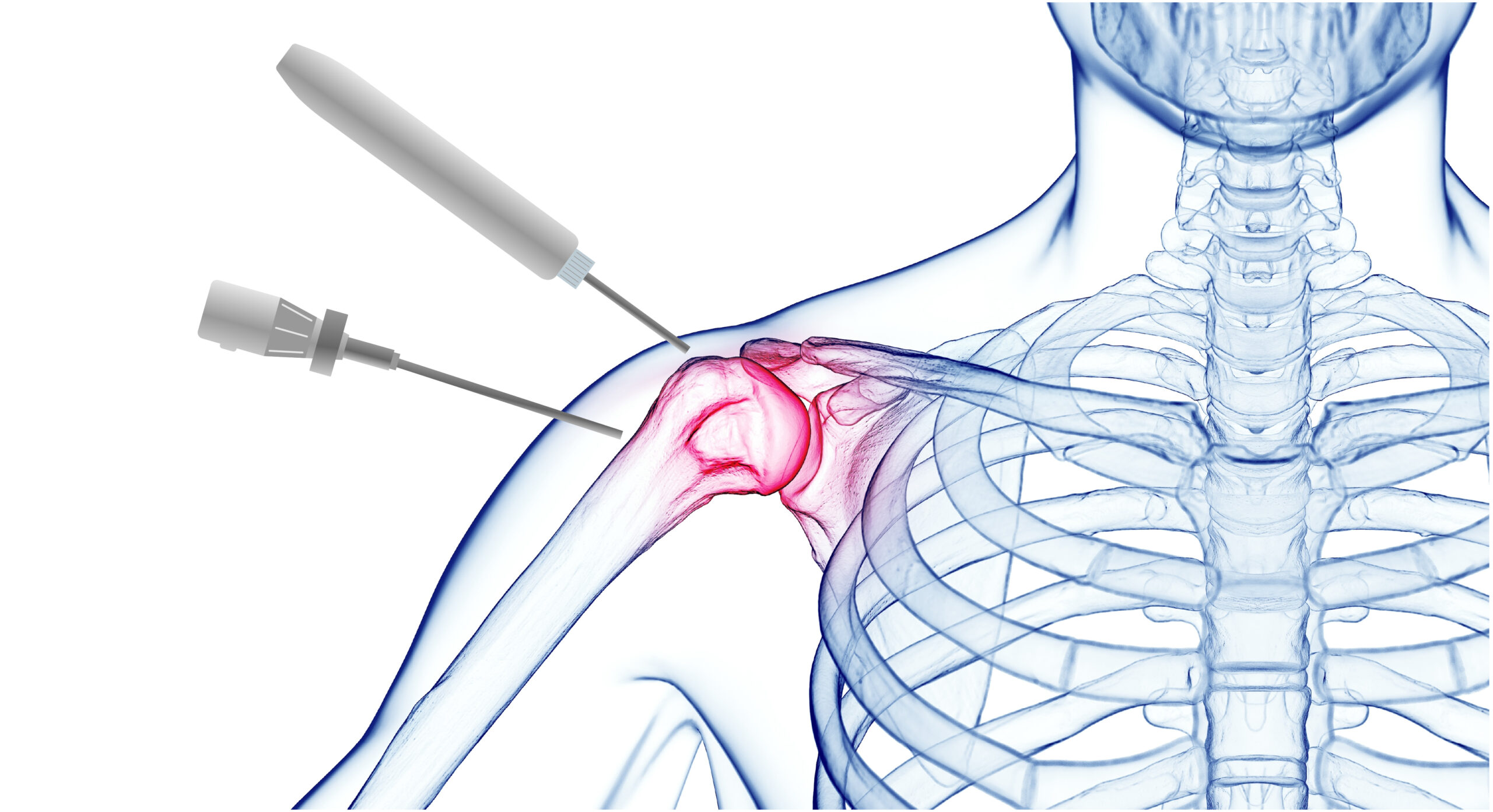
The Evolution and Advantages of the Arthroscopic Method
Shoulder arthroscopy has been performed since the 1970s, but in recent years, it has made tremendous progress. Modern radiofrequency tools, absorbable anchors, and ultra-high-strength sutures have changed the rules of the game.
The benefits for you, the patient, are non-negotiable:
- Bloodless and Painless Technique: There are no open incisions. Healthy muscles are not cut, injured, or violated. As a result, there is no bleeding, and the postoperative pain is minimal compared to the past.
- Rapid Tissue Healing: The small openings (portals) lead to minimal tissue damage, allowing the body to focus its healing capacity on the lesion itself (e.g. on the sutured tendon) rather than on the skin wound.
- Same-day Discharge (Day Clinic): Arthroscopy does not require lengthy hospitalisation. Patients, after a short monitoring period in the recovery room, return home a few hours after the operation is completed.
- Safety and Accuracy: The camera provides visibility into the “blind” points of the joint, preventing medical errors and ensuring 100% anatomical correction.
- Excellent Cosmetic Result: After a few months, the microscopic scars on the skin are often impossible to detect with the naked eye.
Which Shoulder Conditions are Treated Arthroscopically? (Detailed Presentation)
The technique of arthroscopy in the hands of a specialised doctor is not standardised; it is fully personalised. It addresses 95% of traumatic and degenerative shoulder conditions. Let us see in detail the most common:
Rotator Cuff Tears:
One of the most common causes of pain and weakness. The tendons of the rotator cuff, either due to injury (e.g. lifting a weight) or due to natural wear, tear and detach from the bone. The patient is unable to raise the arm and suffers unbearable pain at night. The Arthroscopic Solution: We insert special anchors (small implants of biocompatible material) into the humeral bone. These anchors carry strong sutures, with which we “catch” the torn tendon and fix it back to its anatomical position. This technique fully restores strength and mobility.
Impingement Syndrome & Shoulder Tendinitis:
The subacromial space is the “tunnel” through which the tendons pass. When the bone above (the acromion) develops “spurs” (osteophytes), the space narrows. Every time you lift your arm, the tendon rubs against (impinges on) the bone, causing inflammation, swelling, and intense pain. The Arthroscopic Solution (Acromioplasty): Using a special microscopic burr (shaver/burr), we “smooth out” the protruding bone, enlarge the tunnel, and remove the inflamed bursa. The tendon is immediately released.
Calcific Tendinitis:
For unknown reasons, often in middle-aged women, calcium crystals (like chalk or toothpaste) form within the mass of the tendon. This causes the most acute, dramatic pain in orthopaedics. The patient often goes to the emergency department unable even to move the arm. The Arthroscopic Solution: We pinpoint the exact location of the calcium deposit with the help of the camera, open the tendon, clean it, and aspirate all the material. The patient wakes up from the operation practically cured of the pain.
Frozen Shoulder (Adhesive Capsulitis):
The joint capsule thickens, becomes stiff, and fills with adhesions. The shoulder “locks” completely. It is a distressing condition that torments the patient for months or even years. The Arthroscopic Solution (Capsulotomy): Instead of waiting years for it to “thaw” on its own, we enter arthroscopically and, using a special radiofrequency instrument, we cut the adhesions and “open” the capsule 360 degrees. The shoulder is released at that very moment, and as early as the next day the patient has a full range of motion.
Shoulder Instability & Dislocations (Bankart Lesion / Hill-Sachs):
Common in young people and athletes. When the shoulder dislocates, it tears the labrum and the ligaments (Bankart Lesion). If not repaired, the shoulder will continue to dislocate (recurrent dislocation), gradually destroying the cartilage. The Arthroscopic Solution: We perform arthroscopic stabilisation. We place anchors in the glenoid and suture the torn ligaments back to their position, recreating the “protective wall” that keeps the shoulder stable.
SLAP Lesions (Superior Labrum Anterior and Posterior):
A tear at the upper part of the labrum, where the tendon of the biceps attaches. Very common in throwing athletes (tennis, volleyball, basketball). Treated with arthroscopic fixation of the lesion or biceps tenodesis.